

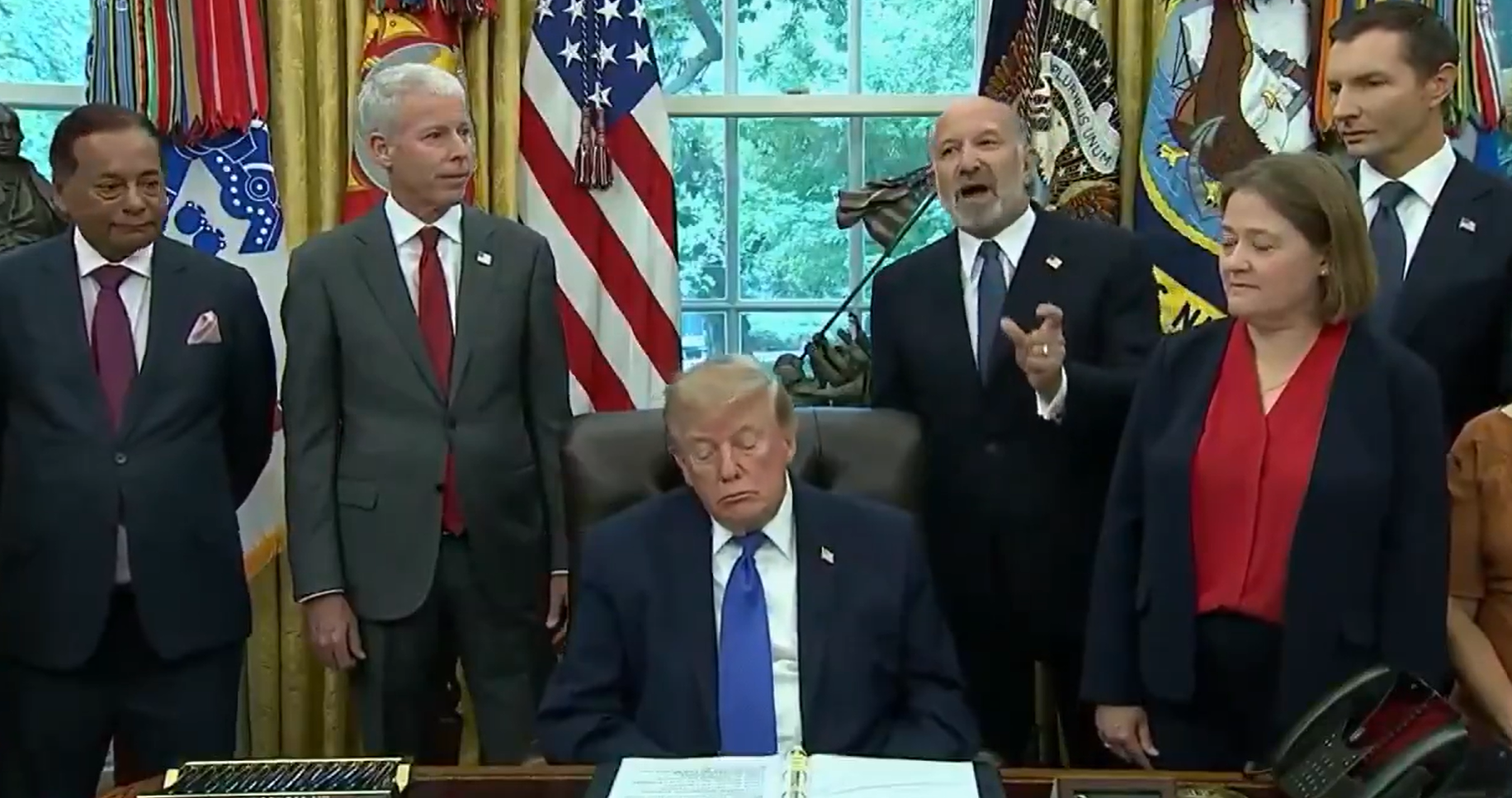
President Donald Trump announced Monday that Mesabi Metallics will construct a roughly $15 billion steel complex in Iowa—described by the White House as the largest steel plant in U.S. history. Combined with additional investment to complete the company’s Minnesota iron ore operations, the integrated project is valued at about $18 billion.
The plant is slated for southeast Iowa, with Iowa officials pointing to Lee County. First steel production is targeted for 2030. The first phase is expected to produce about 7.5 million tons of steel per year, with capacity ramping to as much as 10 million tons annually once fully operational. That would represent a substantial share of recent U.S. raw steel output, which ran in the low-to-mid 80 million metric tons range in 2025 (or about 90 million net tons on some industry measures). Existing large U.S. facilities such as U.S. Steel’s Gary Works have been cited around 7.5 million net tons of capability; a 10-million-ton complex would stand out as a single-site leader.
The mill is designed as a mine-to-mill domestic chain. Iron ore will come from Mesabi Metallics’ new DR-grade pellet operations at Nashwauk on Minnesota’s Mesabi Iron Range—the first new U.S. iron ore mine in about 50 years. Pellets will move by rail to Iowa. The steel plant will use hot direct-reduced iron (DRI) paired with electric arc furnaces (EAF), a route that uses less energy and produces lower emissions than traditional blast-furnace steelmaking. Company statements describe the Iowa complex as one of the more efficient and environmentally friendly facilities of its kind, with output intended for defense, automotive, infrastructure, appliances, energy, and shipbuilding.
White House and company figures put construction employment at 5,000 to 6,000 jobs and permanent Iowa operations at about 1,750 jobs. The Minnesota mine is expected to support roughly 350 permanent positions. Officials have cited about $95 billion in economic activity from the first phase through construction and the first decade of operations. Commerce Secretary Howard Lutnick said the deal is done. Export-Import Bank of the United States support of up to $10 billion has been part of the financing picture for the broader Mesabi effort.
Company status: private, not publicly traded
Mesabi Metallics Company LLC is a private company backed by India’s Essar Group, a family-controlled industrial conglomerate. It is not publicly traded and has no ticker or quarterly earnings releases of the kind investors see from Nucor, Cleveland-Cliffs, or Steel Dynamics. Essar has put more than $2 billion of equity into the Minnesota project. Recent private financings have included facilities with Breakwall Capital and Macquarie, plus a $265 million sale of a 50% royalty interest to The Metals Royalty Company (NASDAQ: TMCR). Because Mesabi itself is private, there are no “last earnings” comparable to a listed steelmaker.
Same-day Canadian steel news: tariffs, not this plant
On the same day as the Iowa announcement, Cleveland-Cliffs’ Canadian subsidiary Stelco said it would indefinitely idle cold-rolled and coated finishing operations at Hamilton Works in Ontario, with wind-down beginning around October 9. Reports put the impact at up to 500 employees; the United Steelworkers local estimated about 350 layoffs. Stelco said it would concentrate steel production at its Nanticoke (Lake Erie Works) plant and offer some Hamilton workers jobs there. The company and coverage blamed U.S. tariffs—up to 50% on certain Canadian steel and aluminum under a June 2025 executive order—and weak demand for finished products, not the Mesabi Iowa project. No major outlet tied the Hamilton idle directly to Monday’s White House event. Algoma Steel had already undergone large earlier workforce reductions tied to tariffs and its shift away from blast-furnace operations.
For Energy News Beat readers, the Iowa project matters as much for power and industrial policy as for tons of steel. DRI-EAF steelmaking is electricity- and gas-intensive compared with scrap-only mini-mills but far less carbon- and coke-intensive than integrated blast furnaces. Iowa’s power prices and rail/river logistics were part of the site logic. The announcement fits a broader push to lock iron ore, pellets, and finished steel inside the United States rather than relying on imported DR-grade ore and foreign slab.
Construction still has to clear incentives, permitting, and a multi-year build. Production in 2030 is years after the current political calendar. If delivered at the stated scale, the plant would move Iowa from a non-factor in steelmaking to one of the country’s largest producing states and add a large new load and offtake story for Midwestern energy and freight.
Making Appendices Great Again
Check out the World’s Greatest Podcast Show Notes at EnergyNewsBeat.co or EnergyNewsBeat.com.
Appendix: Sources
- ABC News: https://www-cdn.abcnews.com/Politics/trump-announce-new-15b-steel-plant-white-house/story?id=136821451
- The Gazette (Iowa): https://www.thegazette.com/news/state/largest-ever-u-s-steel-plant-coming-to-iowa-white-house-says/article_67899b0c-1946-4803-9ad8-e5e350afd89c.html
- KCRG: https://www.kcrg.com/2026/09/28/largest-steel-plant-us-coming-iowa-white-house-officials-share/
- The Guardian: https://www.theguardian.com/us-news/2026/sep/28/trump-steel-plant-iowa
- CNBC: https://www.cnbc.com/2026/09/28/trump-steel-plant-iowa.html
- Reuters: https://www.reuters.com/business/trump-unveil-planned-15-billion-iowa-steel-project-2026-09-28/
- Quad Cities Business Journal: https://quadcitiesbusiness.com/report-15-billion-mega-steal-plant-in-works-for-iowa/
- KTTC: https://www.kttc.com/2026/09/28/mesabi-metallics-plans-18-billion-project-linking-minnesota-mine-new-iowa-steel-plant/
- Mesabi Tribune: https://www.mesabitribune.com/news/local/mesabi-metallics-to-build-steel-plant-in-iowa/article_6ae26b3d-6db0-4012-8fe7-32b0269235fa.html
- Des Moines Register: https://www.desmoinesregister.com/story/news/politics/2026/09/28/lee-county-iowa-steel-plant-president-donald-trump-mesabi-metallics/91973586007/
- KWQC: https://www.kwqc.com/2026/09/28/trump-announce-location-largest-steel-plant-us/
- CBS News: https://www.cbsnews.com/news/trump-steel-plant-iowa/
- Company site (project framing): https://www.mesabimetallics.com/
Company ownership, financing, and private status
- Mesabi Metallics royalty sale to TMCR: https://www.mesabimetallics.com/mesabi-metallics-monetizes-portion-of-royalty-interest-for-265-million/
- Essar / Mesabi financing releases: https://www.essar.com/inthenews/mesabi-metallics-secures-150-million-from-macquarie-group/
- Company about page: https://www.mesabimetallics.com/company/
- ZoomInfo profile (private LLC): https://www.zoominfo.com/c/mesabi-metallics-company-llc/399380517
- MPR News (mine context): https://www.mprnews.org/story/2026/09/23/first-new-taconite-mine-in-50-years-opens-on-iron-range
- Steel Market Update: https://www.steelmarketupdate.com/2026/09/24/mesabi-metallics-nears-iron-ore-pellet-output-eyes-dri-plant-report/
U.S. steel production context
- American Iron and Steel Institute 2025 ASR: https://www.steel.org/2026/08/aisi-releases-annual-statistical-report-for-2025/
- USGS Mineral Commodity Summary (iron and steel): https://pubs.usgs.gov/periodicals/mcs2026/mcs2026-iron-steel.pdf
- World Steel Association figures: https://worldsteel.org/data/world-steel-in-figures/world-steel-in-figures-2026/
- U.S. Steel Gary Works / Big River capacity pages: https://www.ussteel.com/about-us/locations
Canada / Stelco Hamilton developments (Sept. 28, 2026)
- Reuters: https://www.reuters.com/business/cleveland-cliffs-idle-output-canada-steel-plant-blames-tariffs-says-cbc-2026-09-28/
- CBC News: https://www.cbc.ca/news/canada/hamilton/stelco-tariffs-trump-9.7361216
- CTV News: https://www.ctvnews.ca/toronto/local/hamilton/article/stelco-to-lay-off-350-steelworkers-at-hamilton-plant-union-says/
- The Star / Canadian Press: https://www.thestar.com/business/stelco-idling-hamilton-ont-plant-concentrating-production-at-lake-erie-facility/article_b95fe443-feeb-516e-802f-ce2c20b8a749.html
- CHCH: https://www.chch.com/chch-news/stelco-to-indefinitely-idle-hamilton-works-operations-impacting-up-to-500-employees/
