The Real Cost of Going Green: How Renewable Mandates Are Bankrupting Blue States

Coal Conversations In Energy With Stu Turley Electrical Generation / Utilities ENB Publisher Picks Energy Policy Energy Regulations Energy Transition Financial Crisis Grid Natural Gas Net Zero Regulations Renewables Not Sustainable Solar Top News U.S. Energy News US Energy News

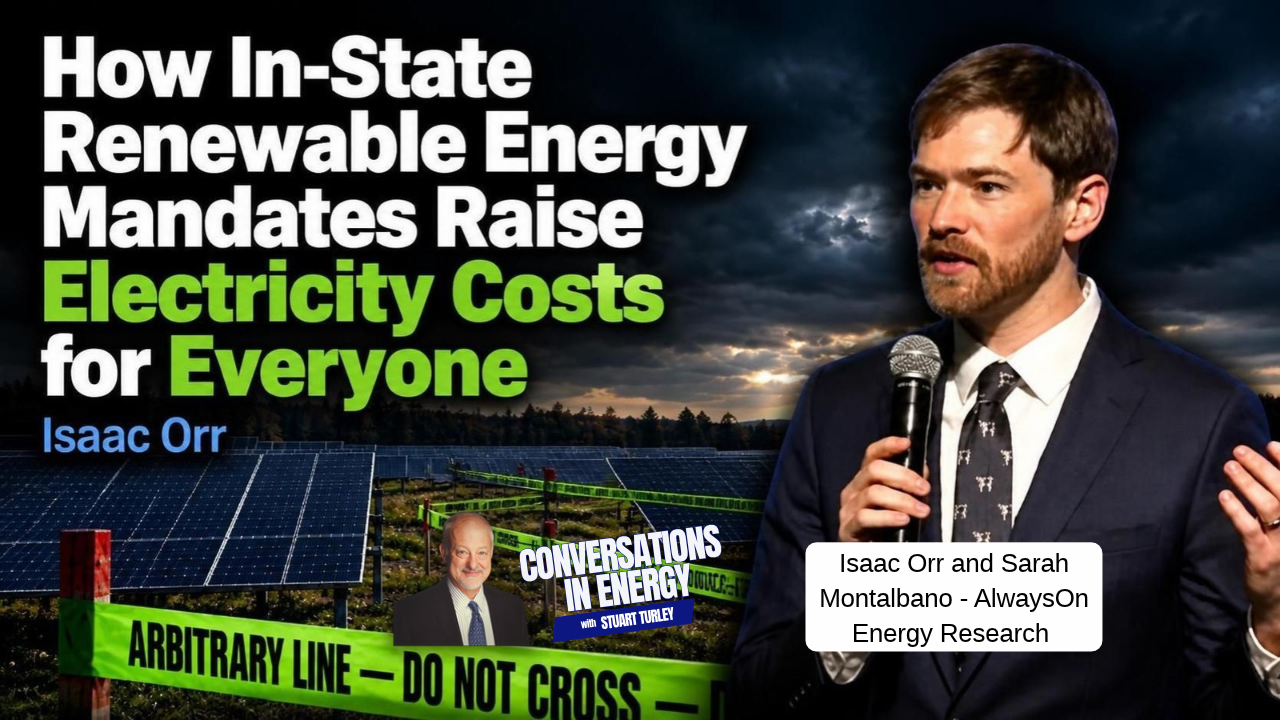
Isaac Orr, Vice President of Research at Always On Energy Research, to discuss a groundbreaking report on how alternative energy mandates are driving up electricity bills across America.

The conversation reveals a stark divide between blue and red states in energy affordability and policy effectiveness, exploring how renewable energy requirements in regions with poor solar and wind resources create economic inefficiencies that ultimately burden consumers.

From the hidden costs of transmission infrastructure to the challenges of grid reliability amid rapid data center expansion, this episode unpacks the complex relationship between energy policy, regulatory reform, and the future of America’s power grid—with critical implications for voters heading into the midterm elections.

Connect with Isaac Orr on his LinkedIn: https://www.linkedin.com/in/isaac-orr-b0732665/

Blue States High Rates –


Isaac Orr – In-State Solar and Alternative Energy Mandates Drive Up Energy 📱
Isaac Orr - In State Solar and Alternative Energy Mandates Drive Up Energy

On Podcasts, I need to make sure I have the right state, as I misstated Massachusetts; we just have so many examples of high energy costs and Blue States right now.

West Virginia’s challenge to Pennsylvania’s energy-credit restrictions highlights how protectionist policies hurt consumers on both sides of the border

Always On Energy Research (Always On) has released a new report showing that state mandates requiring electricity suppliers to purchase locally generated energy credits impose hundreds of millions of dollars in unnecessary costs on families and businesses.

The analysis, How In-State Renewable Energy Mandates Raise Electricity Costs for Everyone, by Isaac Orr and Sarah Montalbano, builds upon the firm’s highly successful Blue States, High Rates report and concludes that geographically restricted credits account for a majority of renewable portfolio standard compliance costs in Pennsylvania, New Jersey, and Washington, D.C. Allowing greater competition could substantially reduce those costs.

1. In-State Solar Mandates & Their Economic Impact

The podcast centers on a new report about how alternative energy mandates, particularly in-state solar requirements, drive up electricity bills by mandating uneconomical resources. States like Massachusetts, New Jersey, Maryland, and Washington, D.C., are highlighted as examples where solar mandates are imposed in regions with poor solar resources, making them economically inefficient. The New Jersey in-state solar mandate alone costs an additional $650 million annually for just 4% of the state’s electricity.

2. Blue States vs. Red States Energy Costs

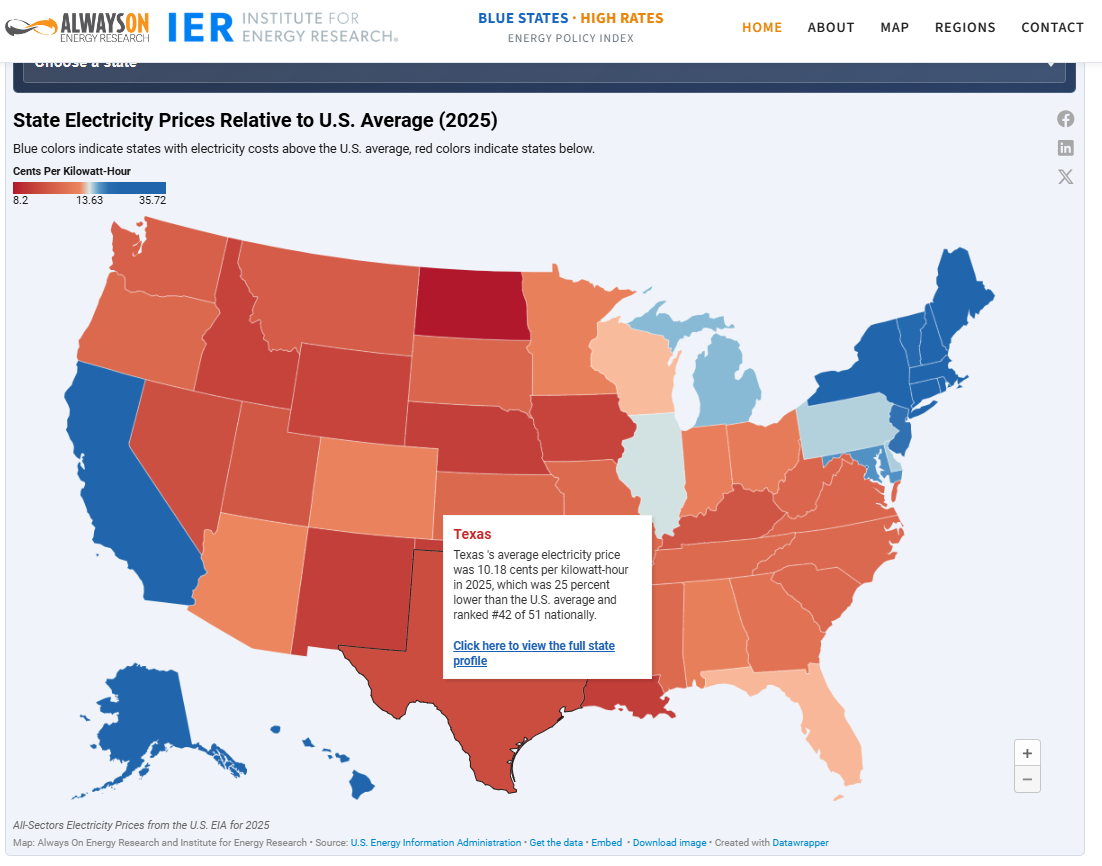
Isaac Orr discusses the “Blue States High Rates” report, which found that when plotting electricity prices against the national average, the most expensive states align with politically liberal states. The discussion explores how liberal states’ hostile business climates, renewable energy mandates, and pipeline restrictions contribute to higher electricity costs compared to red states.

3. Renewable Energy Mandates & Grid Reliability

The hosts examine how renewable portfolio standards and mandates for wind and solar create problems for grid stability. They discuss how these policies don’t account for intermittency issues and the true system-wide costs, including necessary battery storage and transmission infrastructure.

4. Levelized Cost of Energy (LCOE) Misrepresentation

A critical discussion about how LCOE metrics used by organizations like Lazard underestimate the true cost of wind and solar by not including battery storage and grid integration costs. The podcast emphasizes the need for “Always On” LCOE metrics that capture the full system-wide cost.

5. Transmission Infrastructure Costs

The hosts discuss expensive transmission line projects, including New York’s $3-6 billion Canadian hydroelectric line and Texas’s proposed $33 billion Permian transmission line. They argue these costs are socialized while profits are privatized, and that data centers should be co-located with power plants rather than requiring massive new transmission infrastructure.

6. Wind Turbine Decommissioning & Recycling Issues

The podcast addresses the environmental and financial challenges of aging wind turbines (79,000 in the US, with 15,000 aging out at 20 years). Topics include lack of recycling infrastructure, abandoned wind farms in California, and the practice of leaving concrete foundations buried rather than fully reclaiming land.

7. Data Centers & Grid Strain

Discussion of how rapidly growing data center demand is straining the electrical grid, particularly in ERCOT (Texas). The hosts highlight a near-blackout event when solar generation dropped at sunset and storage and wind didn’t compensate in time. They advocate for co-locating data centers with power generation sources.

8. Natural Gas Expansion & Pipeline Permitting

The podcast covers the proposed addition of nearly 400 gigawatts of natural gas capacity in the US, with most development occurring in red states. The discussion emphasizes permitting challenges and how companies are strategically locating facilities in natural gas-producing states to avoid interstate pipeline complications.

9. Coal Industry Future

Analysis of why new coal plants aren’t being built despite increased capacity needs. The hosts discuss regulatory barriers (EPA carbon capture requirements) and suggest that co-locating data centers with coal plants on reclaimed mining sites could revitalize the coal industry.

10. Regulatory Reform & Permitting Crisis

A broader theme throughout is the need for regulatory reform across both red and blue states. The comparison between Colorado (5 permits) and Texas (3,000 drilling permits) illustrates how permitting efficiency affects economic development and energy production.

11. Home Energy Resilience

The hosts discuss the importance of hardening homes against potential blackouts through solar panels, battery storage (Jackery), and backup generators, particularly given California’s intentional blackout policies during fire season.

The overarching message is that well-intentioned renewable energy policies in blue states are creating unintended economic consequences, while regulatory barriers prevent efficient energy infrastructure development nationwide.

Here is the Story on Massachusetts – and Isaac hit it out of the park on that part.
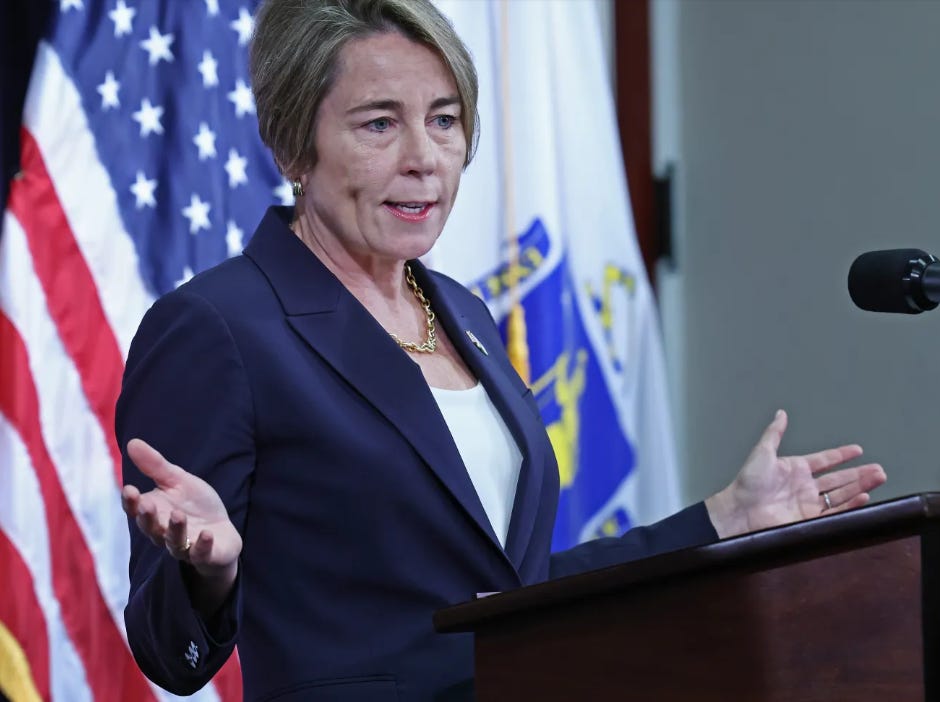
 

Massachusetts Gov. Healey to feds: Step on the gas — after years of bragging she stopped the pipelines

Energy Bad Boys 

Energy modelers Isaac Orr and Mitch Rolling write about the energy issues facing our world.
By Isaac Orr

Always On Energy https://www.aoenergy.org/


Check out the World’s Greatest Podcast Show Notes at EnergyNewsBeat.co or EnergyNewsBeat.com, and the Energy News Beat Substack at:

Energy News Beat 

At The Intersection of Energy and Finance – By Sandstone Group
By Stu Turley

A shout-out to Steve Reese and the Reese Energy Consulting group for sponsoring the Podcast https://reeseenergyconsulting.com/.

Data2 if you have any business systems, can you trust A? Well, they have the patent on validation. . https://data2.zoholandingpage.com/energy

And we have WellDatabase rolling, and we use their tools for the Energy News Beat weekly Rig Reports: https://welldatabase.com/

Also entering Sponsor Rey Trevino, Pecos Operating

https://pecos.energy/

Tagged