President Trump’s 2026 Jones Act waivers moved tens of millions of barrels of U.S. energy that the domestic fleet could not carry. Freight savings are real but modest on a national scale; the larger story is avoided shortages, reopened domestic routes, and a live stress test of a 1920 law that left the United States with too few ships.

On March 17, 2026, the Department of Homeland Security issued the longest and broadest Jones Act waiver since at least 1950, covering energy commodities and fertilizer inputs. The waiver was extended twice and now runs through November 15, 2026, with a narrower product list and voyage-by-voyage review after August 17. The Cato Institute’s Jones Act […]

Continue Reading

The real story is not that China is “back buying everything.” It is that Beijing throttled demand, shifted suppliers, drew inventories, and is now restocking only where landed cost still works — while $1 million-a-day VLCCs make a return to the old full-cycle buying pattern expensive and unlikely.

That is the argument Javier Blas is making in his September 23 Bloomberg Opinion column, China Isn’t Buying More Oil, It’s Buying From Different Markets (also framed as “Don’t Believe the Hype About China’s Oil Buying”). The global market treated China’s pre-war appetite as a floor. In 2026 it became a valve. The Blas thesis: […]

Continue Reading

Refineries Under Fire: How Policy, Geopolitics, and Climate Ideology Created a Global Energy Crisis

Special Guest Richard Norris Pandreco on the Energy Realities Podcast with Dr. Tammy Nemeth, David Blackmon and Stu Turley   In this episode of the Energy Realities podcast, hosts David Blackmon, Stu Turley, and Dr. Tammy Nemeth sit down with Dr. Richard Norris, managing director at Pandrako Advisors and author of the Energy IQ Substack, […]

Continue Reading

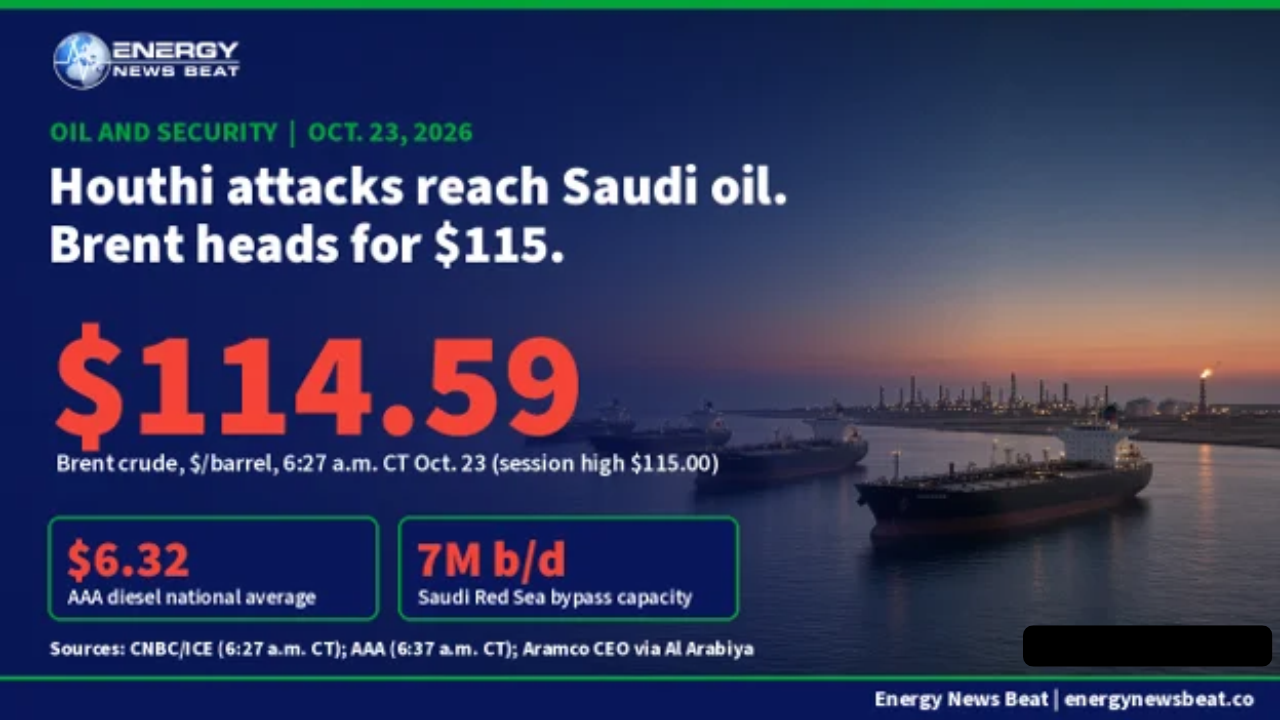
Russia is pushing more crude onto the water just as Saudi Arabia’s last reliable bypass around the Strait of Hormuz goes dark.

The question in Washington is whether President Trump will treat that extra Russian oil as a problem to sanction—or as barrels he can use to keep gasoline and diesel from becoming a midterm disaster. That is the market story of September 15, 2026. It is also a political story. Prices jumped because Saudi’s safety valve […]

Continue Reading