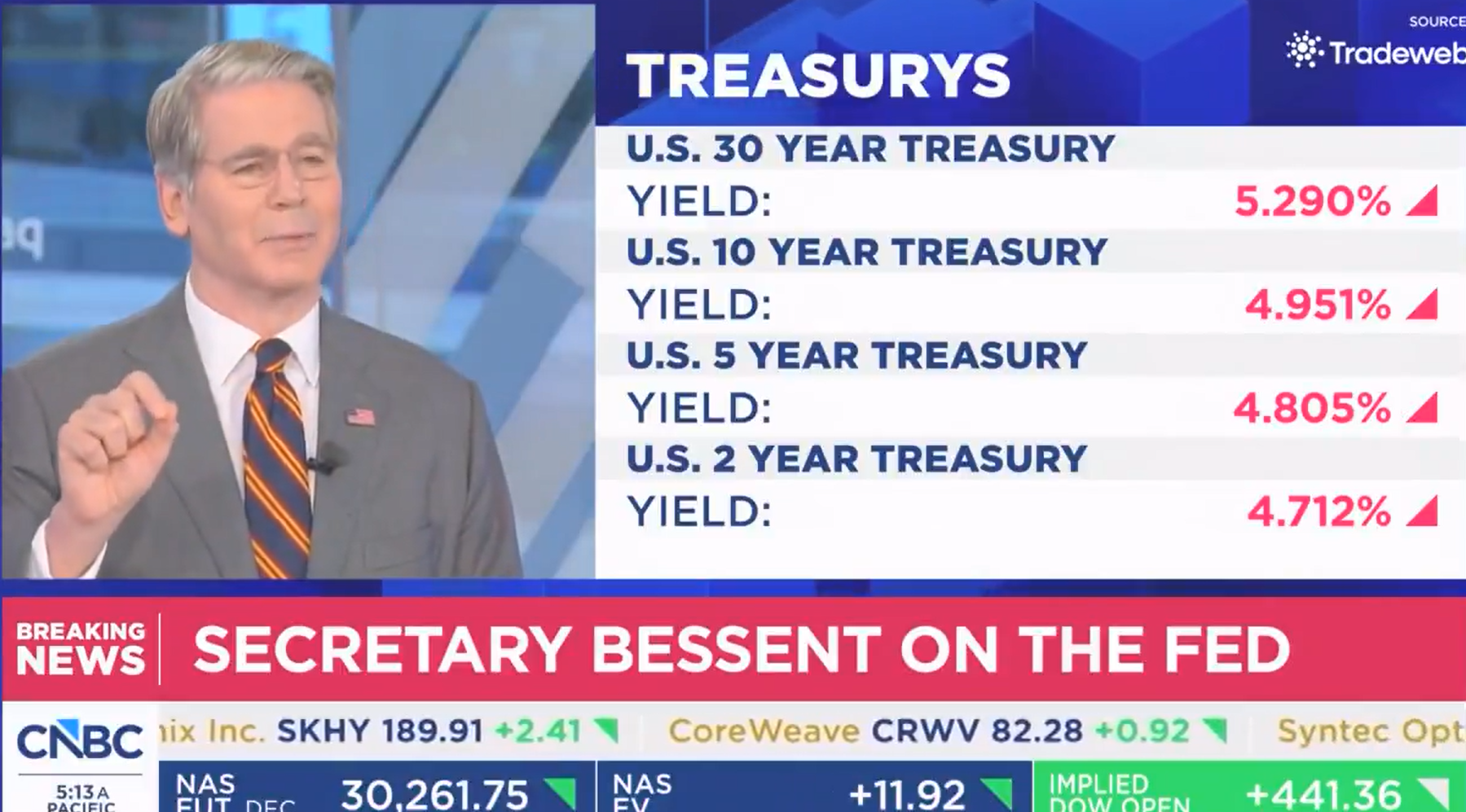
Treasury Secretary Scott Bessent used a Monday appearance on CNBC’s Squawk Box to lay out the working-level results of weekend talks with Chinese Vice Premier He Lifeng — talks he described as a direct extension of the personal relationship between President Donald Trump and President Xi Jinping. Those discussions, held in New York the day before the interview, set the table for this week’s Washington summit and pointed toward concrete movement on trade, energy, and artificial intelligence that could benefit consumers on both sides of the Pacific.
The official U.S. Treasury account posted the full interview, underscoring how the administration wants the conversation seen unfiltered.
The Leaders’ Relationship Is Doing the Heavy Lifting
Bessent repeatedly framed the New York meetings as implementation of “the leaders’ consensus.” Trump and Xi “have a very good relationship” at the personal level, he said, and the working-level teams are trying to translate that rapport into details. Trump visited Beijing in May; Xi arrives in Washington this week; the two leaders could meet two more times after that. “I think that adds great stability to the relationship,” Bessent told Joe Kernen. Trump plans to greet Xi on the tarmac at Joint Base Andrews.
Sunday’s session ran about 12 hours. U.S. Trade Representative Jamieson Greer and his team spent most of the day with their Chinese counterparts. Bessent called the talks “very successful.” A focal point was the temporary trade truce that expires November 10. He said the two sides discussed maintaining the stability that has existed since last fall’s Busan meeting, though he did not announce a completed extension.
Energy and the “30 by 30” Opening for Consumers
The most direct energy takeaway is the operationalization of a U.S.-China Board of Trade first floated in Beijing. Officials are examining a “30 by 30” package: roughly $30 billion of non-critical goods on each side that could move toward most-favored-nation tariff levels.
On the U.S. side, that means selling more agricultural products and more energy. On the Chinese side, it means more everyday consumer and low-tech items entering the American market. Bessent also mentioned medical devices as a possible category. Lower tariffs on those flows would cut costs for households and give U.S. producers — including energy exporters — clearer access to the Chinese market. Rare earths and whether China has fully honored earlier commitments were also on the table.
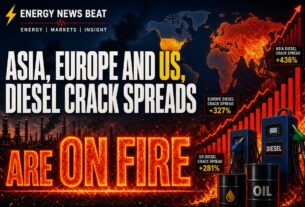
Bessent tied energy markets to interest rates as well. He noted a high correlation between long-dated Treasuries and crude prices plus crack spreads since the Iran conflict began. “Once we get on the other side of this conflict, which we will, I think the oil markets are going to be more supplied than they previously were, and rates should come down.” That combination — more U.S. energy heading to China plus a better-supplied global oil market — is the kind of consumer-facing outcome Energy News Beat readers watch closely.
The AI Dialogue and the Proposed “Hotline”
The two sides formalized what Bessent called the “USA-China AI dialogues.” They agreed to meet again in about two months in Shenzhen, coinciding with the November APEC gathering. The United States proposed a communications or incident line so the world’s two leading AI powers can talk immediately if something goes wrong.
“We want to open a communications line, an incident line so that we have constant communications, especially in the event of some kind of an incident,” Bessent said. The next step is agreeing on the leading dangers: uncontrollable agents, non-state actors in cyber, and non-state actors in bioweapons. He described the goal as moving “from opaque to more transparency.” China, he added, acknowledged that the United States remains in the lead.
Bessent was equally clear that Washington will not give AI labs a government “liability shield.” “It is humans who are responsible, not the AI,” he said, citing MIT’s Daniel Huttenlocher. Labs can slow down whenever they choose; the government will not absorb their risk. Incident reporting with China was part of the same conversation: Beijing has had incidents, he said, but its system lacks the transparency that would let the two sides compare notes in real time.
Taken together, the trade opening, energy export pathway, and AI incident channel amount to groundwork rather than a finished deal. The Thursday Trump-Xi meeting is where those pieces can be elevated.Media Trust Has Become a Real IssueKernen pressed Bessent on President Trump’s decision to ban CNN, MS NOW, and Politico from White House grounds. Bessent said he had been traveling and was not in the Oval Office when the decision was made. He then described a larger problem: public trust.
“For the legacy media, the equilibrium is so far out of kilter because what group is one of the few that is less popular than the U.S. Congress? Legacy media. And why is that? Because of the perceived bias. So the American people deserve good reporting.” He added that some reporters
Bessent’s sharpest line was that “the press cares more about the press than anything else.” He pointed to coverage of the White House Correspondents’ Dinner security incident and a later aircraft situation in Ankara, arguing the press treated its own experience as the story while the president was the target. He said the most transparent president in recent history is still met with coverage that many Americans no longer credit. The result is the well-documented migration of audiences toward other sources — a shift that has become a structural issue for how policy, including energy and trade policy, reaches the public.
What This Week Can Deliver
Bessent’s message was that the working-level talks already produced a formalized AI channel, a live Board of Trade process aimed at $30 billion in lower-tariff two-way trade (energy and agriculture out, consumer goods in), and a shared recognition that the leaders’ relationship makes further steps possible. None of that is a signed comprehensive pact. It is the scaffolding.
If Thursday’s meeting converts that scaffolding into an extended truce, clearer energy export lanes, and a functioning AI incident line, consumers would see it in prices at the pump, at the grocery store, and in the cost of imported everyday goods. Both countries would have a slightly more predictable channel for the technology that is already reshaping power demand and industrial policy.
We at Energy News Beat still think that President Trump’s administration is one of the best total Administration Leaders ever assembled at a critical time in our history. From Energy with Secretary Chris Wright, to Secretary Rubio, and on through to Secretary Bessent, are all at the top of their game. As for the Main Stream Media, we would like to thank them for being so biased and untrustworthy. Americans are looking for new sources, and that’s one reason the Energy News Beat podcast and news feed have been growing.
That is the movement Bessent said the weekend work was designed to enable.
Making Appendices Great Again
Check out the World’s Greatest Podcast Show Notes at EnergyNewsBeat.co or EnergyNewsBeat.com.
Appendix: Sources and links
- U.S. Treasury X post with full interview: https://x.com/USTreasury/status/2102022788932366388
- CNBC full interview video: https://www.cnbc.com/video/2026/09/21/watch-cnbcs-full-interview-with-treasury-secretary-scott-bessent.html
- CNBC unofficial transcript: https://www.cnbc.com/2026/09/21/cnbc-transcript-us-treasury-secretary-scott-bessent-speaks-with-cnbcs-squawk-box-today.html
- CNBC write-up: “Trump admin won’t give AI leaders a ‘liability shield,’ Bessent tells CNBC”: https://www.cnbc.com/2026/09/21/treasury-bessent-cnbc-squawk-trump-bond-affordabilty.html
- CNBC pre-summit meeting report: https://www.cnbc.com/2026/09/20/bessent-he-lifeng-trump-xi-summit.html
Trade, energy, and AI dialogue reporting
- The Hill: “Scott Bessent says US and China may lower tariffs on $30 billion in goods”: https://thehill.com/homenews/administration/6102128-us-china-lowering-tariffs/
- Breitbart: “Greer, Bessent Report Progress in China Talks”: https://www.breitbart.com/economy/2026/09/21/bessent-greer-china-talks/
- CBS News: “Bessent meets with Chinese counterpart ahead of Trump-Xi summit”: https://www.cbsnews.com/news/scott-bessent-meeting-china-he-lifeng-ahead-trump-xi-summit/
- Business Insider: “The US Wants an AI-Era ‘Red Phone’ With China”: https://www.businessinsider.com/trump-xi-meeting-summit-us-china-ai-safety-risk-mechanism-2026-9
- CNBC TV18: “US Treasury Secretary Bessent calls China trade, AI talks ‘very successful’”: https://www.cnbctv18.com/world/us-treasury-secretary-bessent-calls-china-trade-ai-talks-very-successful-ahead-of-trump-xi-summit-19994449.htm
Media-trust coverage of the same interview
- The Hill: “Scott Bessent defends President Trump’s ban on CNN, MS NOW, and Politico reporters”: https://thehill.com/homenews/6101941-bessent-defends-white-house-media-ban/
- Mediaite: “Scott Bessent Slams Press For Caring Mostly About Itself”: https://www.mediaite.com/media/news/scott-bessent-slams-journalists-over-af1-switch-and-whcd-shooting-coverage-to-defend-trump-ban/
- Daily Wire: “Scott Bessent Has Message For Reporters Who Think They’re The Story”: https://www.dailywire.com/news/scott-bessent-weighs-in-on-trumps-press-ban
Related Energy News Beat context
- Energy News Beat home and China-meeting LNG preview: https://energynewsbeat.co/