Matador’s $1.3 B Paloma Deal is beating expectations

Matador Resources closed its acquisition of EnCap-backed Paloma Permian on October 1, 2026, for $1.255 billion in cash, subject to customary post-closing adjustments. The deal, announced in July at a headline consideration of $1.275 billion, is already beating the company’s own underwriting on the producing wells, while adding a large block of high-quality undeveloped inventory […]

Continue Reading

Tankers burning in Hormuz, and Secretary Wright is highly confident Europe will dump emergency diesel stocks

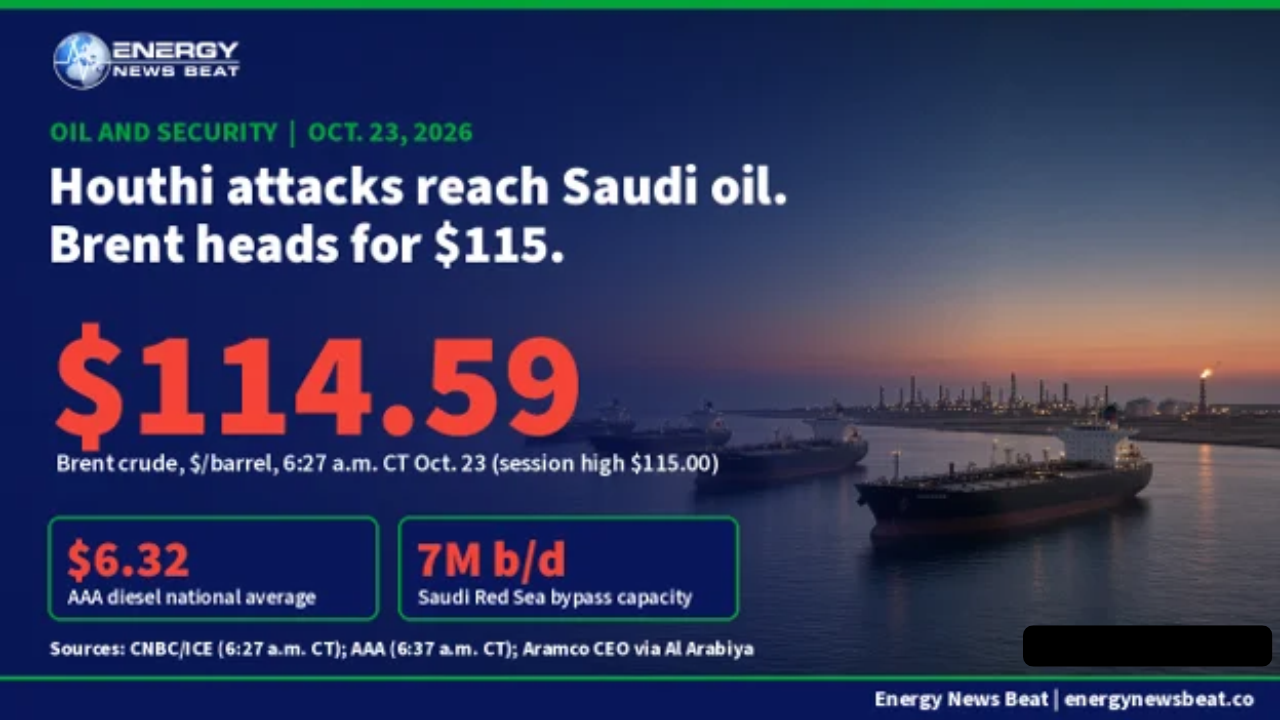
Tankers are burning in the Strait of Hormuz, visible traffic through the waterway has collapsed to a fraction of normal levels, and U.S. Energy Secretary Chris Wright says he is “highly confident” Europe will draw down emergency diesel stocks to ease a global shortage. The combination is keeping a firm geopolitical premium in crude while […]

Continue Reading

Alaska to Get $54 Billion Korean LNG Investment: The Long-Stalled Project, Who’s Involved, and Why It Matters for Midterms, Energy Security, and the Entire United States

President Donald Trump is set to unveil a major South Korean investment package that includes roughly $54 billion directed at Alaska’s long-planned liquefied natural gas (LNG) project, according to White House officials and multiple reports. The announcement, expected in the Oval Office, is the first major tranche from South Korea’s broader $200 billion in U.S. […]

Continue Reading

Doug Ford and Danielle Smith’s Northern Shield Energy Corridor is a 3,300-kilometre all-Canadian crude oil pipeline proposal from Hardisty, Alberta, to Sarnia, Ontario.

Announced in July 2026 and still at the feasibility-study stage, it would initially move 500,000 barrels per day (expandable to 800,000) of Western Canadian crude to Sarnia’s refining hub. Ontario is leading the study, due by the end of 2026, and Ford has said the province is prepared to provide “patient capital” while seeking private […]

Continue Reading

President Trump’s 2026 Jones Act waivers moved tens of millions of barrels of U.S. energy that the domestic fleet could not carry. Freight savings are real but modest on a national scale; the larger story is avoided shortages, reopened domestic routes, and a live stress test of a 1920 law that left the United States with too few ships.

On March 17, 2026, the Department of Homeland Security issued the longest and broadest Jones Act waiver since at least 1950, covering energy commodities and fertilizer inputs. The waiver was extended twice and now runs through November 15, 2026, with a narrower product list and voyage-by-voyage review after August 17. The Cato Institute’s Jones Act […]

Continue Reading