

September 17, 2026
Unseasonable heat is pushing power systems that serve more than 100 million people across the United States and Canada into a tight operating window — just as plants and transmission equipment that were scheduled for fall maintenance are still needed online.
Temperatures are running more than 20°F above normal in parts of the Midcontinent Independent System Operator (MISO) footprint. Triple-digit heat is forecast across the South through at least Sunday, according to the National Weather Service. Bloomberg reported that the heat is straining electrical equipment that operators had planned to take out for repairs.
This is not a midsummer surprise. It is a September reminder that reserve margins are thinner, the generation mix is less dispatchable than it used to be, and extreme weather no longer stays in its old seasonal box.reuters.com
The Major Grids Under Pressure
Two of the largest U.S. regional operators sit at the center of this week’s story.MISO, covering 15 states across the Midwest and South, is seeing the most unseasonable heat. The operator has already been through emergency procedures and record September demand earlier this month. Heat in MISO’s southern zones also pulls power from neighbors, tightening conditions far beyond the hottest ZIP codes.
PJM Interconnection, the largest U.S. grid operator and home to about 67 million customers from Chicago to Washington, D.C., issued a Maximum Generation Alert and Load Management Alert for September 17. Peak load was forecast near 133,355 MW. Operators cited above-normal temperatures, planned transmission outages, exports to hotter regions south and west, and more than 35,000 MW of planned generation outages as maintenance season begins. During the July heat peak, planned outages were held near 19,000 MW. PJM also requested a combined Department of Energy emergency order through September 18 to ease environmental restrictions on generating units and, if needed, to direct large data-center loads onto backup generation.
That is the same PJM system that already set near-record summer demand in early July, used thousands of megawatts of demand response to keep the official peak below the 2006 record, and has spent the year issuing capacity-auction shortfalls and emergency-order requests. Data-center load in Northern Virginia remains a structural stress, not a side issue.
Canada is in the same weather pattern. Hydro-Québec is taking a planned outage affecting about 60,000 customers this weekend to complete substation work before winter — exactly the kind of “do it now or risk a worse failure later” maintenance that heat is colliding with on both sides of the border.

An Aging Fleet Asked to Do More
The heat is not only a demand story. It is a machine story.
Gary Cunningham, a director at Tradition Energy, has been blunt about what operators are asking of older units: PJM’s generation fleet is “starting to show signs of its age when trying to stay working.” In related reporting this summer, Cunningham warned that running older resources at maximum output for protracted periods raises the odds they will fail, and that the system already has more power needs and fewer generation and transmission resources to deliver them.
NERC’s 2026 State of Reliability report put numbers on that concern. Conventional generator forced-outage rates rose to 9.2% in 2025, above the historical 7–8% range. Coal units accounted for a 39.8 TWh increase in unavailable energy; combined-cycle gas added another 19.1 TWh. Most large coal units are over 40 years old. Many were not designed for the constant cycling now required as wind and solar swing on and off the system.
That is the quiet part of this week’s alerts. Fall maintenance exists because thermal plants need it. When September heat keeps those plants online, deferred work stacks into winter.
Wind and Solar Up, Firm Capacity Down
The resource mix has shifted faster than replacement firm capacity.
From 2024 to 2025, existing fossil-fueled capacity on the bulk power system fell by 21 GW, while peak-hour contribution from battery, wind, and solar rose by 23 GW — a swap on paper that does not behave the same way on a hot, still evening or a polar-vortex morning. NERC’s long-term assessment now forecasts summer peak demand up 24% over the next decade, driven largely by data centers, with even faster winter growth. MISO, PJM, ERCOT, and parts of the Pacific Northwest are flagged for high risk of insufficient reserve margins within five years.
During PJM’s July heat wave, the extra megawatts did not come from the intermittent fleet. Gas and coal absorbed the surge. Solar and wind output was essentially unchanged from the prior week. Dispatchable plants still carry the peak. Those are also the plants being retired faster than they are replaced.
PJM’s own capacity auctions have now come up short two years running. Reserve margins have been pushed toward the mid-teens against a 20% target. New gas turbines take years to permit and build. Large transformers can take two to three years. Large generators can take five. That is not a planning footnote. It is the reason a September heat wave and a January cold snap now look like two ends of the same problem.
If that combination is not managed — more variable generation, fewer baseload and dispatchable units, exploding large-load demand, aging thermal fleets, and multi-year equipment backlogs — it is a perfect storm. Not next decade. Next winter and next summer.
Winter Is the Next Test, Not a Distant One
A joint FERC-NERC review of Winter Storms Fern and Gianna found the bulk power system held in early 2026. That is good news. It is not a victory lap.Unplanned generator outages still peaked above 68,000 MW. Thermal units carried the peak: gas ran far above a typical winter hour, coal and fuel oil did the same. Texas wind outages more than doubled versus the prior year. Regulators are already warning that 2027 could bring a bigger reliability challenge as demand rises and the power and natural-gas systems stay tightly coupled.
Consumers should treat this September heat the way operators treat a tabletop drill: proof that the same system will be asked to heat homes in a harsh winter with less margin and an older fleet.
Don’t Wait on the Utility
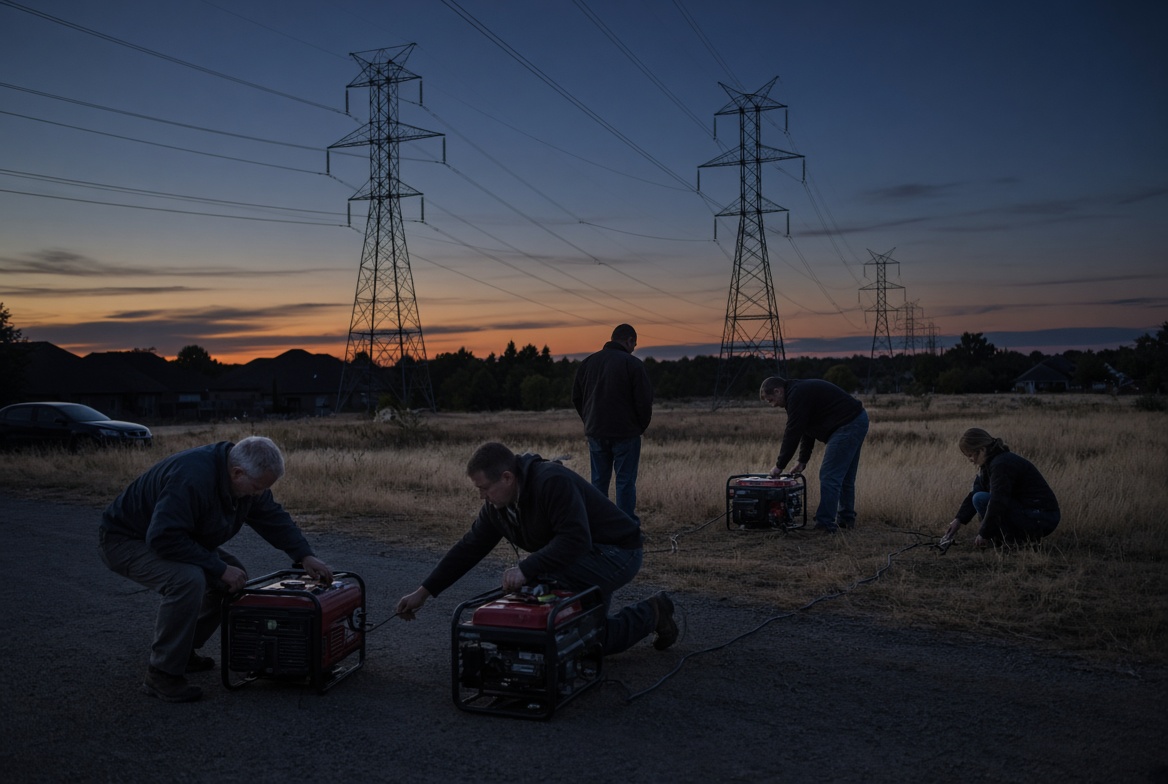
That is the message Stu Turley pressed this week on the Energy News Beat podcast with Doomberg and Steven Wang, CEO of Jackery Americas: National Emergency: Securing U.S. Bulk Power Sources and Supply Chains.The conversation was not abstract. Transformer and inverter shortages, years-long resupply times after a major failure, cyber risk to utilities, and “lumpy” AI and data-center demand all point to the same household conclusion. Grid reliability now starts at home. Residential battery systems and portable power stations are no longer gadgets for camping. They are dual-use tools: personal backup when the feeder goes down, and distributed support if the bulk system is short.
Wang’s industry has moved toward lithium iron phosphate as the workhorse chemistry, with sodium-ion emerging for cold-weather performance and cost. The U.S. market wants larger home systems; apartments and smaller dwellings still need plug-in solar and compact stations. The point is agency. Friends make sure friends have a backup. Do not assume the utility can restore you on your timeline when the same heat, ice, or cyber event is hitting millions of other meters.
Pricing structures that reward wind and solar on a levelized-cost basis, while undervaluing the reliability of gas, coal, nuclear, and storage, have not priced the risk households now carry. Consumers are the ones who sit in the dark while the policy debate continues.
What Consumers Should Watch Over the Next Year
Listen to the warnings that are already public, not the ones that arrive after the outage.
1. More emergency alerts, earlier in the season. Maximum-generation alerts, DOE 202(c) orders, and data-center curtailment authority are becoming routine tools, not last-resort rarities. If your region is in PJM, MISO, ERCOT, or SPP, treat those notices as a household planning trigger.
2. Capacity prices and bills. PJM wholesale costs jumped sharply in 2026 as capacity and energy prices rose with data-center load. Households will see that in rates even if their own usage is flat.
3. Winter reserve math, not summer headlines. NERC’s winter demand growth forecast is steeper than summer. Fuel assurance for gas plants, coal availability, and oil backup for dual-fuel units matter more than nameplate renewable additions.
4. Equipment lead times. If a storm or heat wave takes out a large transformer in your area, replacement is measured in years, not days. That is why a home battery, generator, or portable power station is insurance, not a political statement.
5. Large-load rules. After data centers tripped offline in Northern Virginia and shifted thousands of megawatts in minutes, PJM and NERC are moving toward ride-through and “computational load” standards. Watch whether those rules actually keep the bulk system stable or simply shift more risk onto residential feeders.
6. Retirement schedules versus replacement. Every announcement that a coal or older gas unit will close without a firm, in-service replacement is a reliability event with a delayed fuse. Ask your utility and state commission what is replacing the megawatts, not just the megawatt-hours.
The heat this week is real. The deeper story is that North America’s grids are being asked to cool more people, power more data centers, and survive harsher winters with a fleet that is older, less firm, and slower to rebuild. Utilities will do what they can. Households that wait for the utility to solve it are betting against the math.
Charge the batteries. Know your circuit priorities. Do not wait for the next alert to become an outage.
As Stu Turley, Podcast Host of the Energy News Beat Podcast, said to Steven Wang, CEO of Jackery Americas, “If you love somebody, give them a Jackery.” Some of our subscribers on the YouTube channel even replied that they would rather have a Jackery than chocolates for Valentine’s. They have never had a product recall, and we have used ours in the field for years. We were told we are soon to be a beta tester, as we have different test beds and ways to run the products through their paces.
Here is the interview with Steven and Doomberg.


- Bloomberg, “Intense Heat Strains Power Grids for 100 Million North Americans,” Sept. 17, 2026: https://www.bloomberg.com/news/articles/2026-09-17/intense-heat-strains-power-grids-for-100-million-north-americans?srnd=phx-industries
- Energy News Beat podcast, “National Emergency Securing U.S. Bulk Power Sources and Supply Chains — Doomberg and Steven Wang, CEO, Jackery Americas,” Sept. 17, 2026: https://energynewsbeat.co/conversations-in-energy-with-stu-turley/national-emergency-securing-u-s-bulk-power-sources-and-supply-chains-doomberg-and-steven-wang-ceo-jackery-americas-stop-by/
- YouTube edition of the same conversation: https://youtu.be/gS0fVER55EI
- Jackery: https://www.jackery.com/
- Doomberg: https://newsletter.doomberg.com/
- PJM Inside Lines, “PJM Issues Maximum Generation Alert for Sept. 17,” Sept. 16, 2026: https://insidelines.pjm.com/pjm-issues-maximum-generation-alert-for-sept-17/
- Power Engineering, “Winter storms Fern, Gianna tested the US power grid. 2027 could bring a bigger reliability challenge,” Sept. 17, 2026: https://www.power-eng.com/business/policy-and-regulation/winter-storms-fern-gianna-tested-the-us-power-grid-2027-could-bring-a-bigger-reliability-challenge/
- Utility Dive, “Unplanned power plant outages fell sharply during 2025/26 winter storms: FERC-NERC report,” Sept. 17, 2026: https://www.utilitydive.com/news/unplanned-power-plant-outages-winter-weather-ferc-nerc/830141/
- NERC / Utility Dive, “NERC forecasts peak demand to rise 24% on new data center loads”: https://www.utilitydive.com/news/nerc-10-year-peak-demand-forecast-jumps-24-on-new-data-center-loads/810955/
- Utility Dive, “Deployable reserves shrinking as coal, gas forced outage rates rise: NERC”: https://www.utilitydive.com/news/deployable-reserves-shrinking-forced-outage-rates-increase-nerc/823765/
- NERC 2026 State of Reliability: https://www.nerc.com/newsroom/2026-State-of-Reliability-Report
- Governing / Bloomberg, “New York Strains Aging Power Barges Amid Growing Electricity Need” (Gary Cunningham comments): https://www.governing.com/infrastructure/new-york-strains-aging-power-barges-amid-growing-electricity-need
- Financial Post / Bloomberg reprint, “Power Grids Reach Tipping Point as 100F Weather, US Data Center Boom Stress Aging Networks”: https://financialpost.com/pmn/business-pmn/power-grids-reach-tipping-point-as-100f-weather-us-data-center-boom-stress-aging-networks
- The National Interest, “What Delivered PJM’s Heat-Wave Load?”: https://nationalinterest.org/blog/energy-world/what-delivered-pjms-heat-wave-load
- Rabobank, “America’s largest power market cannot buy enough capacity”: https://www.rabobank.com/knowledge/d011536467-america-s-largest-power-market-cannot-buy-enough-capacity
- Utility Dive, “Data center load made up 9% of PJM wholesale costs so far in 2026”: https://www.utilitydive.com/news/data-center-load-pjm-wholesale-market/828917/
- Utility Dive, “PJM eyes data center, crypto reliability requirements after 3.8 GW of load trips offline”: https://www.utilitydive.com/news/pjm-nerc-data-center-crypto-reliability-standards/827653/
- Reuters, “Scorching heat forecast threatens demand records on US electric grid,” June 30, 2026: https://www.reuters.com/business/energy/scorching-heat-forecast-threatens-demand-records-us-electric-grid-2026-06-30/
- Insurance Journal, “Blackout Risk Rises as Heat Wave Stresses Largest US Electric Grids,” Sept. 3, 2026: https://www.insurancejournal.com/news/national/2026/09/03/883767.htm
- RTO Insider, “MISO Enters Emergency in Early Sept. Heat, Breaks Demand Record”: https://www.rtoinsider.com/142336-miso-enters-emergency-in-early-sept-heat/
- CBC News, “Hydro-Québec outages to affect 60,000 customers this weekend,” Sept. 17, 2026: https://www.cbc.ca/news/canada/montreal/hydro-quebec-outages-9.7348003
- Grid Status, “By The Thermostat’s Red Glare” (July 2026 heat-wave analysis): https://blog.gridstatus.io/early-july-2026-heat-wave/
- Energy News Beat related coverage on household preparedness and utility bills: https://energynewsbeat.co/electrical-generation/u-s-utilities-and-grid-operators-are-urging-households-to-prepare-for-tighter-electricity-supplies-possible-rolling-blackouts-during-extreme-weather-and-new-risks-from-large-loads-like-data-centers/
- Jackery Products – We recommend and use them for our offices and podcast mobile recordings https://www.jackery.com/