

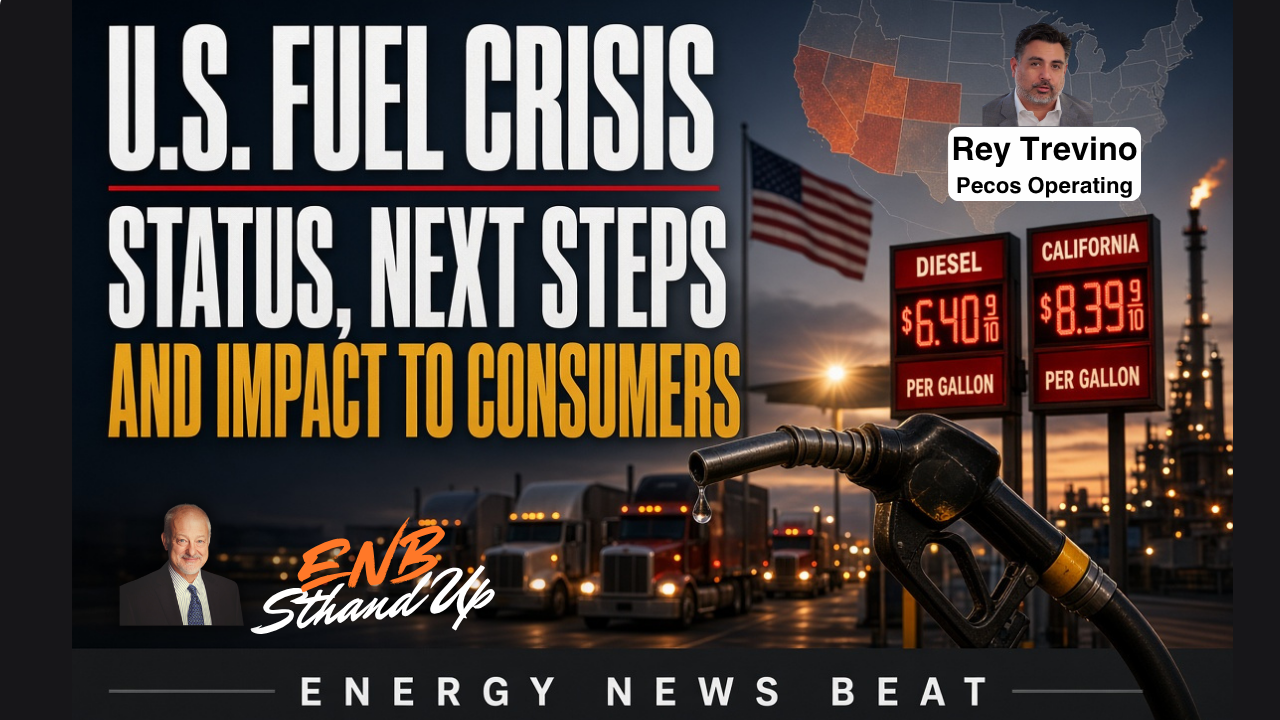
In this episode of Energy Newsbeat, host Stu Turley and energy industry expert Rey Trevino tackle the perfect storm facing America’s energy sector. With diesel prices hitting record highs, critical refineries offline, and geopolitical tensions threatening global oil supplies, the hosts dissect nine major energy stories that reveal how decades of regulatory missteps and policy failures have created a cascading crisis.
From the Midwest refinery collapse to California’s self-inflicted energy disaster, from Federal Reserve blunders to Iranian cyber threats, this conversation exposes the complex web of decisions—and indecisions—that have left the nation vulnerable. Whether you’re concerned about fuel costs, grid reliability, or America’s long-term energy security, this episode provides essential context on why energy dominance must start at home.
Hat tip to Rey Trevino, as we had way too much fun filming today. This will also be going out on his YouTube channel as well.

1. U.S. Diesel & Fuel Crisis
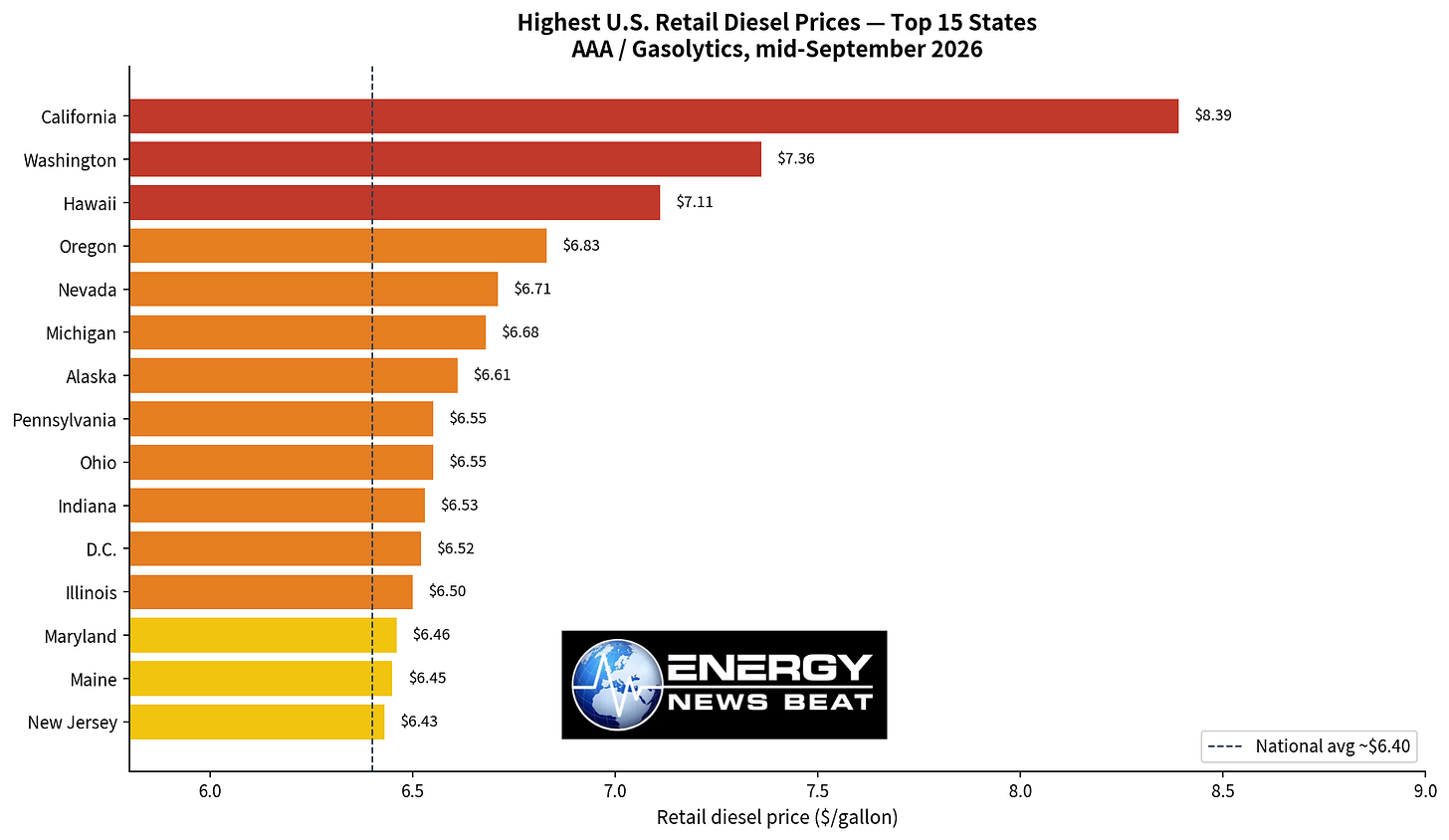
- National retail diesel prices hitting all-time highs near $6.40/gallon
- California diesel prices exceeding $8.30/gallon due to state regulations
- The Exxon Mobil Joliet refinery in Illinois remaining offline after a power outage, exacerbating supply issues
- Distillate inventory problems, particularly on the U.S. East Coast
2. Refinery Capacity & Regional Disparities
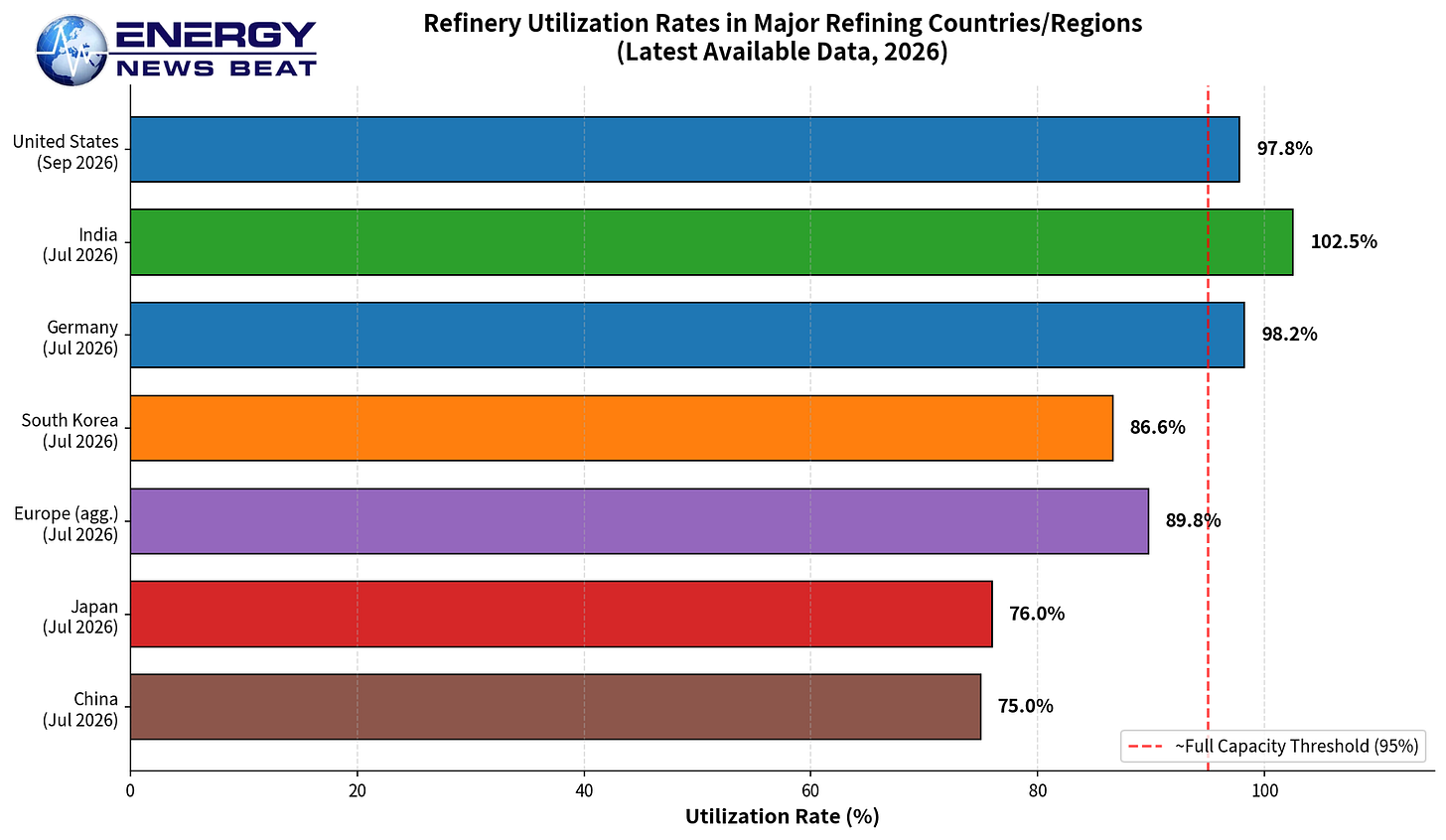
- Midwest refineries running at 100% capacity
- California’s policy-driven energy costs creating a competitive disadvantage
- Seven of California’s refineries slated to close
- The need for $10-100 million in repairs per refinery nationwide
3. Federal Reserve Policy Mistakes
- Treating a supply shock as a demand problem
- Historical parallels to 1973 and 1997-99 recessions triggered by similar policy errors
- Concerns about triggering another recession
4. Russian Sanctions & Global Oil Markets
- Russia’s oil supply to China and South Korea
- Proposed sanctions potentially disrupting global refining capacity
- Impact on Ukraine-Russia peace negotiations
- The need to delay sanctions to address the domestic diesel crisis
5. Oil & Gas Permitting Disparities
- Texas: 4 days to obtain drilling permits, 3,232 permits issued
- Colorado: 450 days for permits, only 335 permits issued
- California: 1,853 permits but severe regulatory barriers
- Impact on oil production despite high oil prices ($100+ WTI)
6. Renewable Energy & Subsidy Issues
- Europe’s largest independent solar operator declaring bankruptcy
- Subsidy programs ending, creating market instability
- Comparison of environmental liabilities between renewables and oil/gas
7. Iran Cyber Threats & Maritime Security
- Iranian hacking attempts on oil tankers approaching U.S. coastlines
- U.S. Coast Guard and FBI boarding a crude carrier in the Gulf of Mexico
- Concerns about American maritime security and shipbuilding capacity
8. Canada’s Energy Policy & Economic Impact
- Canadian Prime Minister Mark Carney’s negotiations with China
- Job losses in Canadian manufacturing (81,800 already lost)
- Critical importance of Canadian oil sands to U.S. energy security
- Without Canadian oil, U.S. diesel prices could reach $12/gallon
9. Power Grid Strain & Energy Infrastructure
- Heat waves stressing North American power grids for 100+ million people
- Natural gas providing 40% of U.S. grid power
- ERCOT (Texas grid) near-miss blackout incident
- Five-year wait times for new gas turbines
- Recommendations for backup power systems
10. Global Food Security
- 20% of world’s grain sourced from Black Sea region
- Ukraine-Russia conflict disrupting grain supplies through drone strikes
The podcast emphasizes that these interconnected energy challenges stem from 50+ years of poor policy decisions and regulatory overreach, particularly in states like California and Colorado, which are driving up consumer costs and reducing domestic production capacity.
This is a tough time, and make no mistake: the bad energy policies for the last 50 years are about to catch up with the U.S. and Global Oil Markets.
Prepare for higher gasoline prices, as the refineries will have to make more diesel, and that means less gasoline.
All the Stories from Today’s Podcast.
2.ExxonMobil Joliet Refinery Floods and Stays Offline as Midwest Diesel Hits Records
This is a huge story, and the refinery went offline Sunday and is still offline, impacting the Midwest.
3.Russian Sanctions Package Should Be Delayed to Help U.S. Consumers
President Trump cannot sign the new sanctions bill, as it will spark a global recession. This has happened before, and between the Fed raising rates and the new sanctions, it will be a huge mistake in his Presidency. Oil is already flowing to China from Russia in the Dark Fleet, and waiving the sanctions will help India, South Korea, and Japan get more oil for their refineries to pick up the slack from the damage in Saudi Arabia and Russian refineries.
Europe’s refineries have available runs in their refineries, but can’t get crude, and the Danube is so low the tankers can’t make it to some refineries. The swing players will be India, South Korea and Japan.
4.Russia Extends Diesel Export Ban Through October. The EU About to Get Hit by the Saudi Oil Crisis
5.Fed Raises Rates Following Past Mistakes: A Supply Shock Treated as a Demand Problem
The Fed is repeating the same mistake that past Feds have made. This is not a demand issue or something they can solve by raising rates.
The 1973 Parallel
The 1973–75 recession followed the first oil shock. The late-1970s/early-1980s episode under Volcker combined a second oil shock with aggressive tightening that produced a deep recession even as it eventually broke inflation. Historians and Fed researchers still debate how much of the downturn was the oil itself versus the monetary response. The practical lesson for energy markets is that rate hikes do not increase barrels; they reduce activity. When the constraint is physical supply, the policy lag can turn one problem into two.
President Trump is not always right, but when he said the Fed should lower rates, he was on target. You are about to see the housing market meet the energy crisis in the middle and help cause a complete recession.
6.Colorado oil and gas wells lag even with high oil prices.
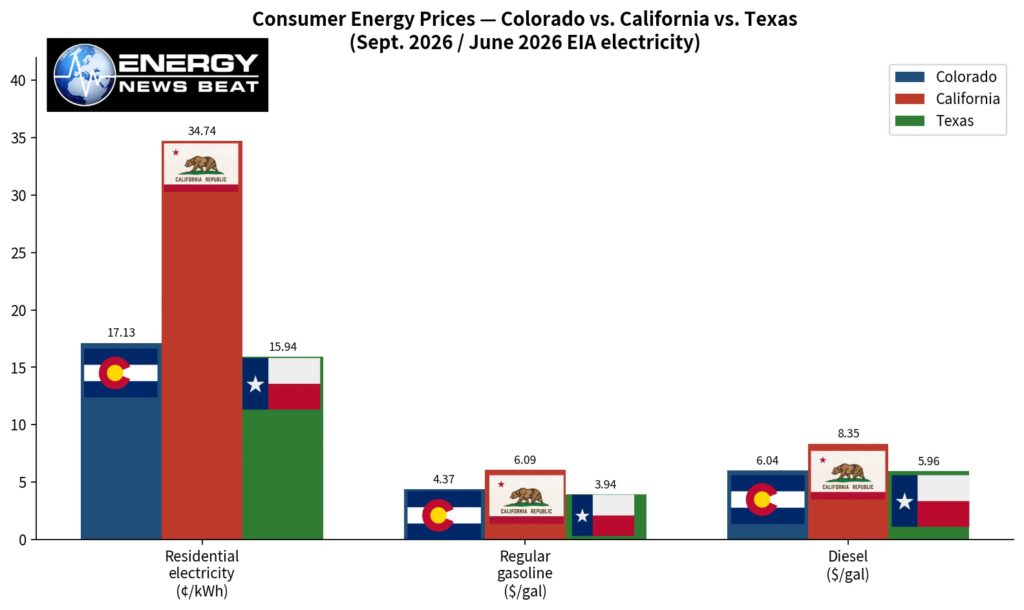
There is a reason that Blue States are more expensive than Red States. And this was the slide where we made fun of California “flipping off consumers” on electricity prices and total energy costs.
7.Iran May Have Been Hacking a Tanker Approaching the U.S. Coast
8.Heat Wave Strains Power Grids for 100 Million North
9. Canada may be slow walking off the pirate’s plank.
This is a huge, sad story as Premier Mark Carney seems to be sacrificing jobs to align with China and the EU.
This story is critical as the solar and wind companies normally follow the EU, and the UK a few years behind. As the subsidies are drying up, we are about to see more wind and solar companies go bankrupt, and the land reclamation projects are not bonded or funded.
At Energy News Beat, we Make Appendices Great Again.

A shout-out to Steve Reese and the Reese Energy Consulting group for sponsoring the Podcast https://reeseenergyconsulting.com/.
Data2 if you have any business systems, can you trust A? Well, they have the patent on validation. . https://data2.zoholandingpage.com/energy
And we have WellDatabase rolling, and we use their tools for the Energy News Beat weekly Rig Reports: https://welldatabase.com/
Also entering Sponsor Rey Trevino, Pecos Operating
