

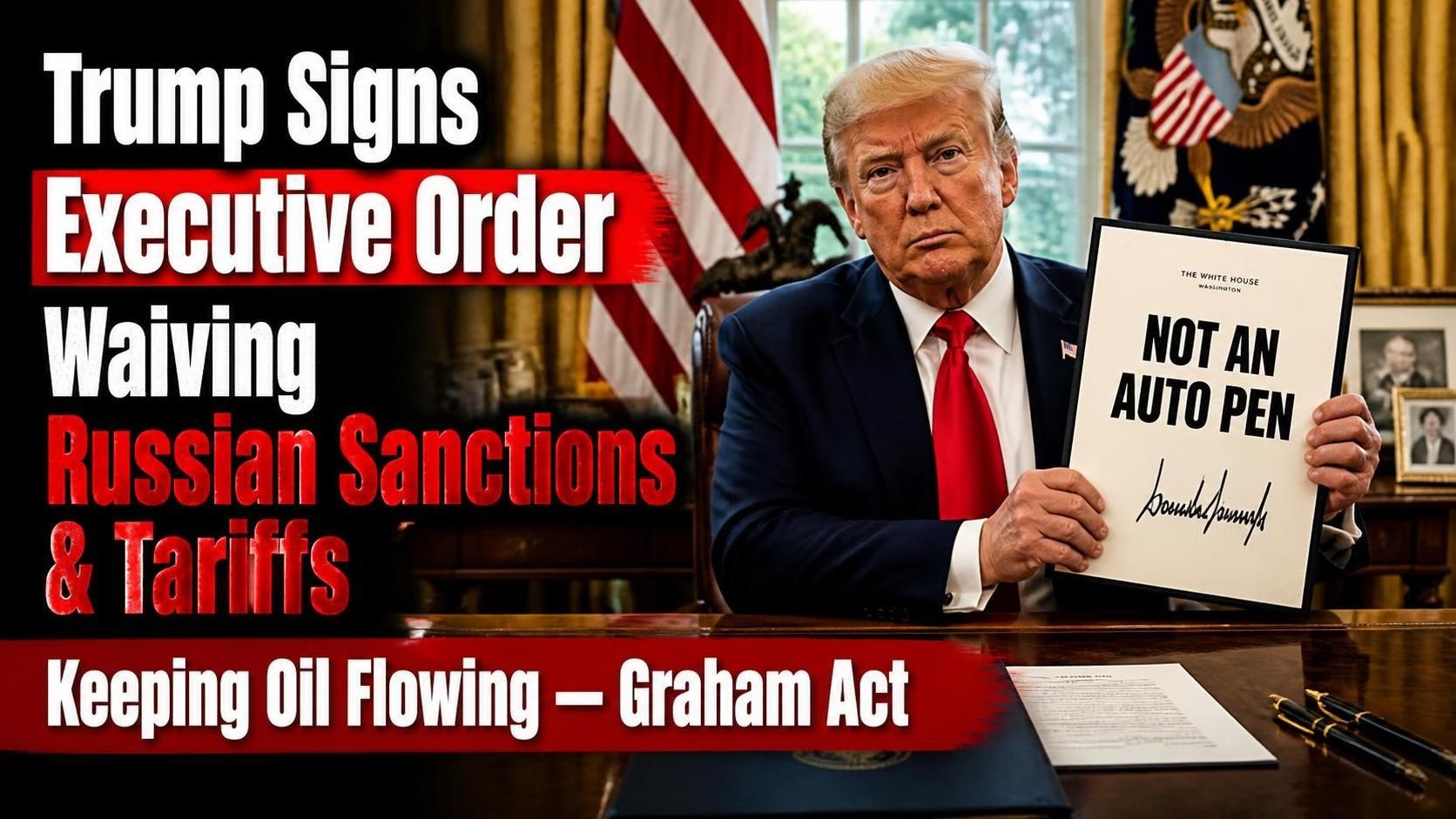
On October 16, 2026, President Donald Trump signed an executive order implementing the Lindsey O. Graham Sanctioning Russia and Iran Act of 2026 while simultaneously waiving most of its new sanctions, restrictions, and duties. The move, taken under the Act’s national-interest waiver authority (Section 115), came just days before the measures were set to take effect around October 18. It aligns with the practical energy-security priority of keeping physical oil and product barrels moving in a tight global market—consistent with the emphasis Energy News Beat and host Stu Turley have placed on supply continuity, diesel availability, and avoiding self-inflicted disruptions that raise prices for American consumers and businesses. Source: White House NYTimes
Stu Turley recommended on the podcast and in Substack writing that the White House not implement the sanctions bill, as it would have no value for voters, consumers, or the market at this time. While we can not take credit for them reading our recommendations, it is nice they got this one right.
What the Executive Order Waived
The Graham Act, signed into law on September 18, 2026, authorized steep new measures aimed at cutting Russian energy revenues that help fund the war in Ukraine. These included:
- An additional 500% ad valorem duty on goods imported from Russia.
- 100% duties on goods from the five largest importers of Russian crude oil or natural gas (and the five leading facilitators of Russian oil sanctions evasion) that continued new purchases after the deadline.
- Broad new sanctions and restrictions targeting foreign persons, Russian officials and entities, financial institutions, and elements of the so-called shadow (or “dark”) fleet of tankers used to circumvent existing Western restrictions.
The October 16 executive order formally establishes several of these duty increases and then waives their application, along with numerous sanctions provisions (including sections 102(a), 102(d), 102(e), 103–111, and 117). Trump certified to Congress that the waiver is in the national interest of the United States and submitted an explanatory report. The waivers remain in place until the President or the Secretary of State (in consultation with Treasury and the U.S. Trade Representative) determines further action is appropriate. Importantly, the order does not unwind sanctions imposed under earlier executive orders addressing Russian harmful foreign activities.White HouseCBS News
The timing follows a separate recent arrangement in which Russia agreed to supply additional diesel volumes to global and U.S. markets amid elevated distillate prices and crack spreads. The waiver reduces the immediate risk of new tariff walls or secondary sanctions that could further constrain Russian export volumes or deter buyers.
Impact on the Dark/Shadow Fleet
The Graham Act explicitly targeted Russia’s shadow fleet—the aging tankers that operate outside Western insurance, financing, and flagging systems, often with AIS (Automatic Identification System) dark or spoofed to hide sanctioned cargoes. By waiving key new sanctions provisions aimed at these vessels, their owners, insurers, and related networks, the executive order eases prospective U.S. pressure on this trade.
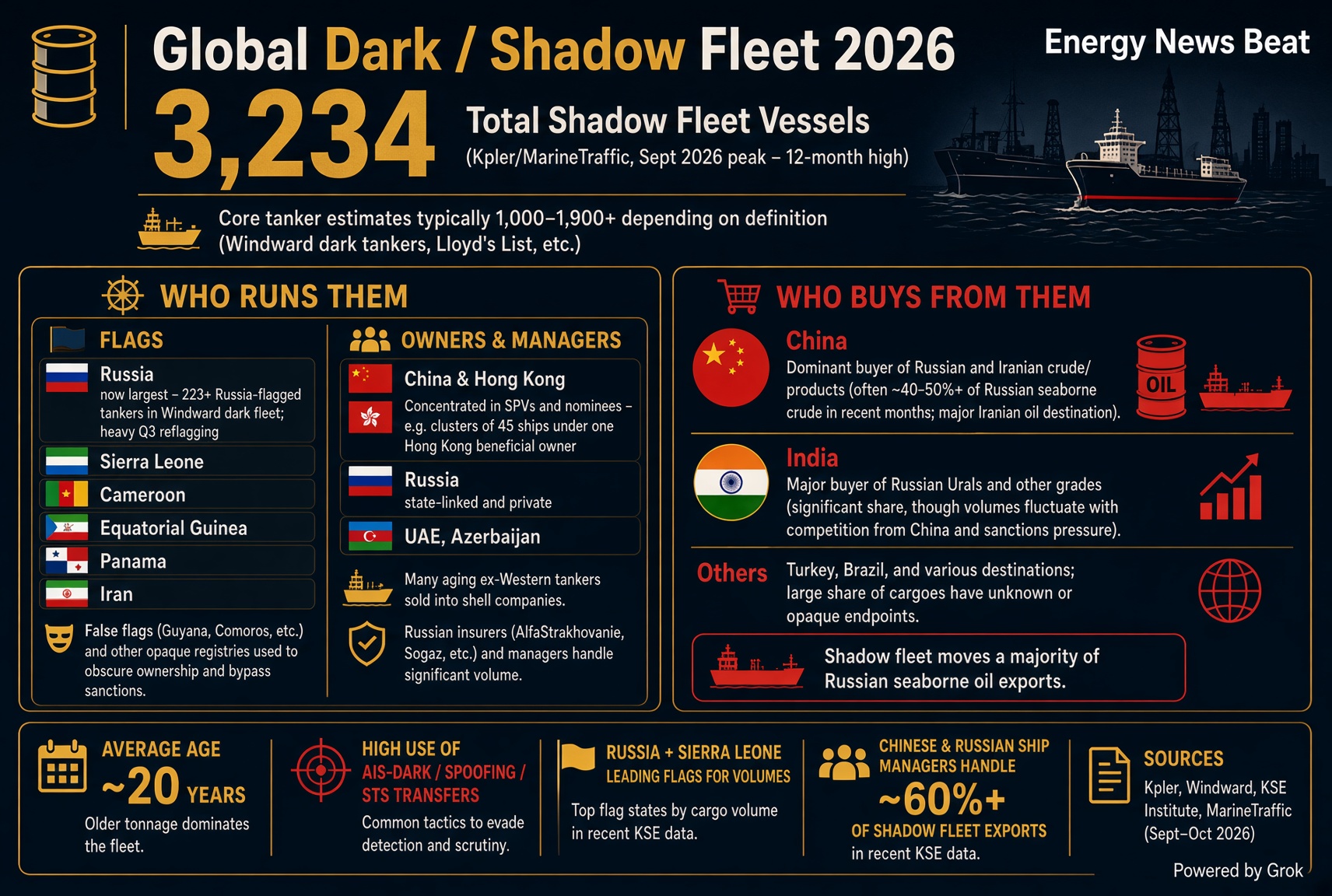
Fleet size estimates vary by definition and tracker. Kpler Risk & Compliance data (via MarineTraffic) put the shadow fleet at 3,234 vessels in September 2026—its highest level in 12 months, after adding 62 vessels that month. This figure covers a broad set of vessels involved in shadow operations (not exclusively tankers). Core tanker-focused trackers typically report lower numbers for the active dark fleet carrying Russian, Iranian, or Venezuelan oil (often in the 900–1,900+ tanker range depending on methodology, age thresholds, and inclusion of gray-zone vessels). Windward’s Q3 2026 data highlighted structural shifts, including a record number of dark-fleet tankers reflagging to Russia (223 Russia-flagged tankers in its tracked dark fleet, with 84 reflagging in the quarter alone). Russia has become the largest flag within parts of the dark fleet by some measures.XWindward
The user’s recollection of a figure above 3,345 is close to the recent Kpler/MarineTraffic peak of 3,234; counts continue to fluctuate with new designations, reflaggings, and detections of dark activity (AIS-off port calls, ship-to-ship transfers, and spoofing). The waiver does not lift existing U.S., EU, or UK designations on many of these vessels, nor does it magically restore them to mainstream Western trade. Analysts (including Kpler) have noted that even selective sanctions relief on individual shadow-fleet tankers would free up limited usable capacity due to vessel age, insurance gaps, and residual risk. EU and UK measures continue to constrain the fleet. Still, reduced U.S. escalation risk supports continued operation of the existing shadow fleet that moves a substantial share of Russian seaborne exports.
China, Oil Flows, and Price Implications
China has been the dominant buyer of discounted Russian crude for years, absorbing volumes as India and others have adjusted purchases under sanctions pressure. Chinese state majors have at times paused seaborne Russian barrels following earlier U.S. sanctions on Rosneft and Lukoil, while independent “teapot” refiners have remained active. The Graham Act’s 100% tariff threat on major importers created a clear risk for Chinese goods exports to the United States. By waiving those duties, the executive order removes an immediate deterrent, supporting the continuation (and potential modest expansion) of Chinese purchases of Russian oil. This helps keep Russian barrels in the market rather than stranded or further discounted, which is a net positive for global supply balances.Firstpost
In a market already stressed by Middle East disruptions, preserving Russian export volumes is one of the more direct levers available to ease tightness—particularly in diesel, where crack spreads have been extreme. The combination of the diesel supply arrangement and the Graham Act waiver is directionally helpful for lower (or at least more stable) prices by avoiding an abrupt further reduction in Russian flows. However, it is not a silver bullet.
Escalating Houthi Attacks and the Middle East Premium
Houthi attacks have escalated significantly, expanding beyond Red Sea shipping to target Saudi infrastructure, including the Aramco headquarters in Dhahran, airports (with deadly results), and energy assets such as the East-West Pipeline. These strikes, tied to the broader Iran-linked conflict and the ongoing war involving the United States, Israel, and Iran (with repeated threats and attacks affecting the Strait of Hormuz), have introduced a substantial geopolitical risk premium. Tanker rates, insurance costs, and freight have surged; dark or AIS-off transits through key chokepoints have increased. Middle East crude exports have partially recovered via workarounds, but inventories have been drawn down, and volatility remains high.RbccmReuters
What Analysts Are Saying on Oil Prices
Brent has recently traded in the mid-to-high $100s (futures near $106–110 in mid-October sessions), well above pre-conflict levels, reflecting the Hormuz/Houthi risk premium estimated by some at roughly $20–25 per barrel. Forecasts vary but generally expect elevated prices to persist while conflict risks remain, with gradual moderation if Middle East flows continue recovering:
- Goldman Sachs has raised its December 2026 Brent forecast to around $90/bbl (from $85), with a 2027 average near $80, citing a large risk premium and the potential for further escalation even as supply adapts.
- The EIA’s October Short-Term Energy Outlook projects a Q4 2026 Brent average of about $105/bbl (up sharply from prior forecasts on continued Middle East constraints and inventory draws), moderating toward roughly $84 in 2027 as production recovers.
- Kpler has lifted its 12-month North Sea Dated forecast to $81/bbl, reflecting a shift from expected surplus to deficit due to prolonged Middle East disruptions.
- Other commentary highlights range-bound trading near $100–110 in the near term, with upside risk from further Houthi/Iranian attacks on infrastructure or shipping and downside support from any additional Russian product volumes and avoided sanctions disruptions.
The net effect of the executive order is modestly bearish for prices by supporting Russian supply continuity and reducing one source of secondary sanctions/tariff risk for major buyers such as China. The dominant near-term driver remains Middle East security of supply. In the spirit of prioritizing physical barrels over paper disruptions—much as Energy News Beat has argued in the context of diesel tightness, refinery constraints, and geopolitical realities—the waiver prioritizes keeping oil flowing.GoldmansachsGoo
Check out the World’s Greatest Podcast Show Notes at EnergyNewsBeat.co or EnergyNewsBeat.com. And subscribe to: The Energy News Beat Substack.
- White House Executive Order (full text): https://www.whitehouse.gov/presidential-actions/2026/10/implementing-the-lindsey-o-graham-sanctioning-russia-and-iran-act-of-2026/
- The New York Times coverage: https://www.nytimes.com/2026/10/16/us/politics/trump-order-russia-sanctions.html
- CBS News: https://www.cbsnews.com/news/trump-waives-sanctions-tariffs-russian-oil-lindsey-graham/
- Reuters: https://www.reuters.com/world/europe/trump-waives-many-russia-related-sanctions-tariffs-before-they-were-take-effect-2026-10-17/
- bne IntelliNews: https://www.intellinews.com/trump-waives-russia-s-hellish-sanctions-two-days-before-they-bite-476718/
- MarineTraffic/Kpler shadow fleet update (via X): Shadow fleet at 3,234 vessels in September 2026.
- Windward Q3 2026 Maritime Risk Report summaries (dark fleet reflagging and Russia-flagged tankers).
- Goldman Sachs Research (October 2026 oil outlook).
- EIA Short-Term Energy Outlook (October 2026).
- Kpler crude forecast commentary.
- Coverage of Houthi attacks on Saudi Aramco and infrastructure (Reuters, RBC, CNBC, and others, mid-October 2026).
- Energy News Beat / Stu Turley recent discussions on diesel markets, supply continuity, and energy security (energynewsbeat.co and related podcasts).
This article is based on publicly available reporting and data as of October 17, 2026. Market conditions and policy details can evolve quickly.