

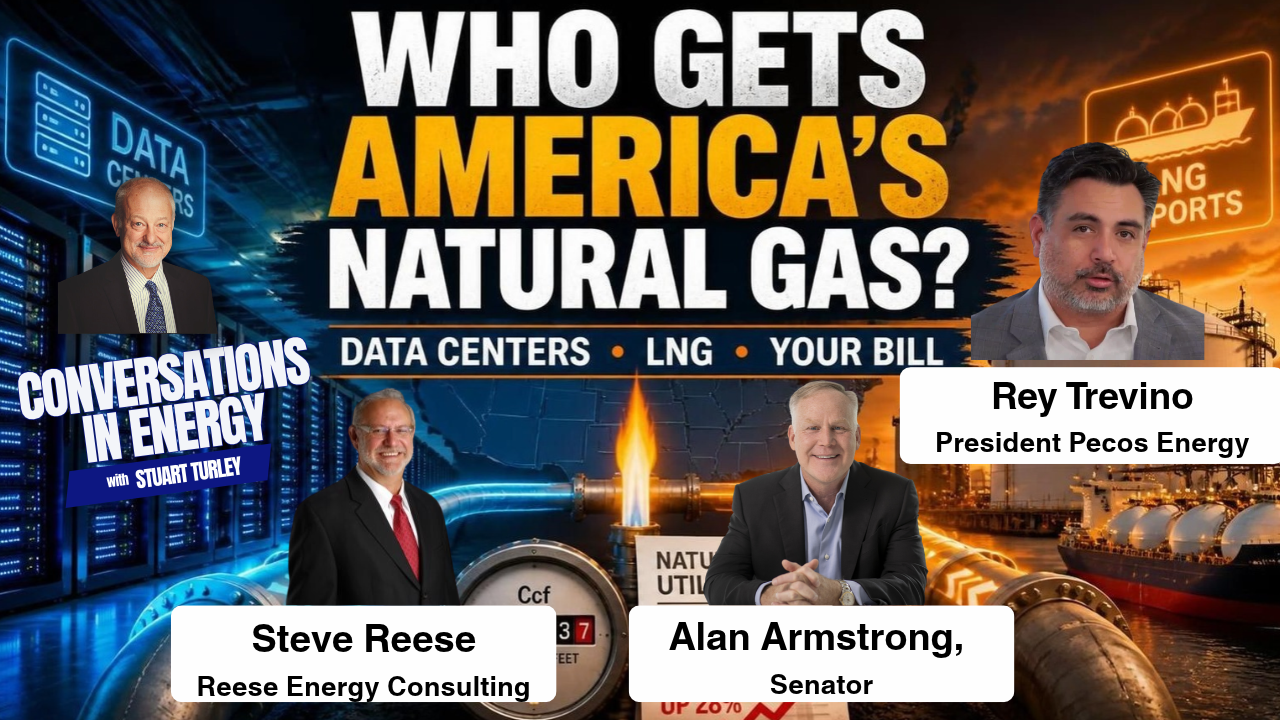
In this special joint episode of The Crude Truth and Energy Newsbeat podcasts, hosts Rey Trevino and Stu Turley sit down with Oklahoma Senator Alan Armstrong and energy consultant Steve Reese to discuss the seismic shifts in U.S. energy policy following the 2024 election. With Democrats gaining significant ground in Texas—a traditionally Republican energy stronghold—and Republicans consolidating power nationally, the panel explores the critical intersection of politics and energy infrastructure. The conversation centers on three interconnected challenges: the explosive growth of data centers demanding unprecedented amounts of electricity and natural gas, the urgent need for permitting reform to unlock pipeline development, and the widening gap between climate rhetoric and the practical realities of energy production. Against this backdrop, Senator Armstrong provides insider perspective on the Senate’s legislative priorities, while the panelists debate how America can balance energy affordability, reliability, and environmental goals—and what happens when political decisions override market forces.

1. 2026 Midterm Election Results & Political Implications
The podcast opens with a discussion of the recent “blue tsunami” in Texas, where Democrats won major statewide offices including Governor, Lieutenant Governor, and the Railroad Commission. This contrasts sharply with Oklahoma’s solid Republican performance. The hosts worry about how these results will affect energy policy.
2. Data Centers & Energy Demand
A significant focus is the rapid expansion of data centers and their massive energy requirements. The incoming Texas governor has plans to ban data centers, which concerns the panel. They discuss how data centers represent a critical new demand driver for electricity and natural gas, and how regulatory decisions could shift these investments to other states like Oklahoma.
3. Permitting Reform
Senator Armstrong emphasizes that permitting reform is the critical legislative priority before Congress adjourns. He explains that the first Senate vote will be on a cloture motion for a bipartisan permitting reform bill designed to streamline infrastructure projects across all energy sectors (renewables, natural gas, hydropower, etc.) without picking winners or losers.
This was one of the most important parts of the entire discussion. Call your Senator in Blue or Red; it doesn’t matter, as permitting for all forms of energy will be critical. So if you want lower energy prices no matter the state, get ready for this bill in the Senate.
4. Natural Gas & LNG Export
The panel discusses the importance of expanding natural gas infrastructure, particularly:
- LNG export capacity and international demand
- The need for new pipelines, especially in the Northeast (New England)
- How natural gas is more reliable than renewables for powering data centers
- The disconnect between politicians’ climate goals and their opposition to natural gas infrastructure
5. Infrastructure & Pipeline Development
A recurring theme is the aging U.S. infrastructure (50-100 years old) and the need for modern natural gas pipelines. They highlight specific projects like the Marcellus Shale development and the challenges of building pipelines through states like New York that have regulatory barriers.
6. Regulatory Burden & State vs. Federal Authority
The discussion covers how state-level permitting (particularly in New York) has blocked pipeline projects, and how the permitting reform bill addresses this by requiring states to use the “least burdensome” environmental protection methods rather than arbitrary standards.
7. Energy Pricing & Consumer Impact
The panel analyzes how permitting delays and regulatory restrictions drive up energy costs for consumers, particularly:
- High heating oil prices in New England ($6.10/gallon)
- Diesel prices nationally (~$6.35/gallon)
- How these costs are driven by refinery capacity constraints and net-zero policies
8. Messaging & Political Strategy
Discussion of how Republicans failed to effectively communicate their energy message during the campaign, including the benefits of low natural gas prices and the real causes of high fuel costs.
9. Personal Reflections
The podcast concludes with Senator Armstrong’s reflections on leaving office and Steve Reese sharing his recent kidney transplant recovery, adding a human element to the discussion.
We would also like to give our sponsors a shout-out.
Check out the World’s Greatest Podcast Show Notes at EnergyNewsBeat.co or EnergyNewsBeat.com, and the Energy News Beat Substack at:

At The Intersection of Energy and Finance – By Sandstone Group
A shout-out to Steve Reese and the Reese Energy Consulting group for sponsoring the Podcast https://reeseenergyconsulting.com/.
Data2 if you have any business systems, can you trust A? Well, they have the patent on validation. . https://data2.zoholandingpage.com/energy
And we have WellDatabase rolling, and we use their tools for the Energy News Beat weekly Rig Reports: https://welldatabase.com/
Also entering Sponsor Rey Trevino, Pecos Operating https://pecos.energy/
Thanks to our paid Subscribers, and send us your projects if you need help looking at projects impacting your community.
Thank you Jeff Chestnut, CaptMike, The Word Merchant, James West, and many others for tuning into my live video! Join me for my next live video in the app.
