On October 19, 2026, Albertans voted in a multi-question, non-binding referendum and delivered a decisive result on a question that has simmered for decades: whether the province should remain in Confederation or begin the constitutional process toward a future binding vote on separation. Unofficial results from Elections Alberta showed roughly 76 percent supporting Alberta remaining a province of Canada, versus about 24 percent backing the legal process for a binding separation referendum. Turnout was substantial, with more than 1.3 million advance and special ballots already cast before election day—around 43 percent of eligible voters—and final tallies still coming in as of early October 20.BBCThe Globe and MailResults.elections.ab
We highly recommend subscribing to The Nemeth Report Substack.
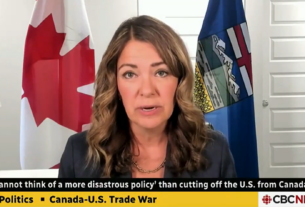
Prime Minister Mark Carney called it “a clear choice” for unity. Alberta Premier Danielle Smith welcomed the “widespread support for remaining in Canada” and a “stronger Alberta in a united Canada.” Separatist organizers, including figures associated with the Alberta Prosperity Project, said the result fell short but wasn’t the end of the conversation, noting that at least a quarter of voters expressed deep dissatisfaction. The campaign was driven less by cultural or linguistic grievances than by longstanding economic ones: federal environmental policies, pipeline delays, and a perception that Ottawa treats Alberta’s oil wealth as a problem to be managed rather than a strategic asset.AP NewsNewsweek
The Oil Industry’s Reality Inside Canada
Alberta accounts for the overwhelming majority of Canadian oil production—on the order of four million barrels per day and roughly 80–84 percent of the national total—drawn largely from the oil sands. The province has long been the dominant foreign supplier of crude to the United States; historically, the vast bulk of Canadian crude exports (often cited near 90 percent in recent years) has flowed south. That relationship underpins both Alberta’s fiscal capacity and a significant share of North American energy security.English.elpais
Carney’s government has negotiated agreements with Smith that open a path for a new privately financed pipeline capable of moving at least one million barrels per day of “low-emission” Alberta bitumen to Pacific tidewater for Asian markets, contingent on carbon capture projects (Pathways Plus), strengthened industrial carbon pricing (effective price rising toward $130 per tonne by 2040 in the latest implementation framework), methane reductions, and other conditions. Ottawa has also moved to drop a planned oil-and-gas emissions cap and ease certain clean-electricity rules for Alberta in exchange for those commitments. These steps represent a partial course correction from earlier federal approaches, driven in part by U.S. trade tensions under President Trump and the desire to diversify export markets.GcReutersGc
Yet the underlying regulatory architecture remains. Industrial carbon pricing continues, compliance costs are real, and large-scale export infrastructure still faces Indigenous consultation, interprovincial politics, and environmental screens. For an industry that competes primarily with U.S. producers facing no national carbon price, every added layer of cost or delay erodes competitiveness. Staying in Canada means accepting that framework—and, as recent developments show, potentially adding another from overseas.
Ottawa’s Quiet Offer to Brussels
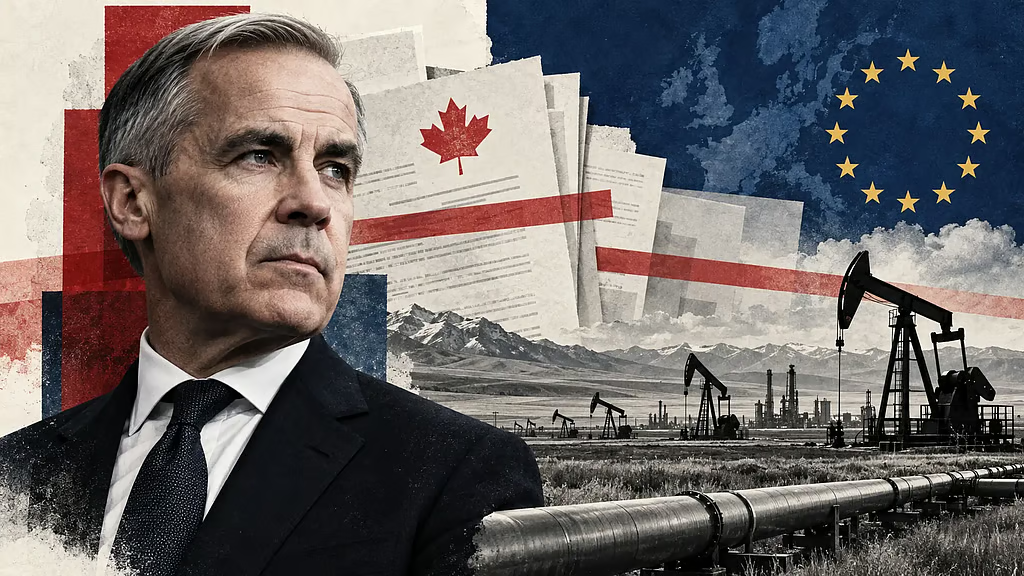
Two closely related pieces by energy analyst Tammy Nemeth detail a nine-page draft document Ottawa transmitted to Brussels in September 2026. The document, discussed in the context of deeper Canada-EU partnership talks (sometimes framed as a path toward a form of “associate” status beyond the existing but still incompletely ratified CETA trade deal and defense ties), covers digital and research technology, critical resources, financial services, people-to-people links, security, and—most consequentially—trade and regulatory cooperation.Thenemethreport.substackWesternstandard
Dr. Tammy Nemeth highlights key elements, including commitments to “align strategies and standards,” with priority given to low-carbon energy sources (LNG, hydro, solar, wind, nuclear), critical minerals, semiconductors, and related sectors. Conventional oil is conspicuously absent. The 2023 Green Alliance remains a compass, with carbon pricing and industrial decarbonization central to 2050 goals. Proposals include an LNG export feasibility study conditioned on the environmental sustainability of offtake agreements, expanded critical-minerals trade, financial-market integration likely to pull in EU climate-related rules (taxonomy, disclosure, ESG/due-diligence requirements), and regular summits plus early consultation on major regulatory initiatives. It makes no reference to provincial consent.
Under Canada’s Constitution (section 92A), provinces hold primary jurisdiction over natural resources, electricity, and related matters. Aligning Canadian standards with EU climate rules—methane measurement and intensity limits matching European import expectations, carbon-intensity tests, biodiversity and climate screens layered onto assessments, emissions and supply-chain disclosure in EU formats, and capital steered by taxonomy-style classifications—would impose substantial compliance costs (auditing, reporting platforms, legal overhead) before a barrel or tonne is sold. U.S. competitors do not face those costs. Nemeth argues this risks turning Canada into a regulatory island in North America, pricing its producers out of the integrated continental market while fostering dependency on a slower-growing European one. Even as some EU member states push to simplify their own rulebook, Ottawa’s draft aligns with the existing apparatus.Thenemethreport.substackWesternstandard
Carney has publicly stressed that Confederation rests on sovereignty, consultation, and strong provincial partners. The leaked document, prepared without evident prior provincial review, points in a different direction: Ottawa willing to trade regulatory autonomy for market access and political symbolism with Brussels. Critics characterize a parliamentary vote on summit outcomes, in the context of a Liberal majority, as limited political theatre.
The Bottom Line
Albertans who voted to remain have chosen continuity inside a federation whose federal government continues to subordinate resource development to climate timelines and now appears prepared to import European regulatory standards without provincial sign-off. The oil industry’s plight is not abstract: higher effective carbon costs, methane and intensity rules aligned with distant importers, disclosure and ESG burdens, and delayed or conditioned infrastructure all raise the hurdle rate for investment relative to unconstrained U.S. production. Diversification toward Asia is positive on paper, but it does not eliminate the North American competitive disadvantage, nor does it erase the risk that EU-aligned rules will constrain the very volumes and carbon intensity of the bitumen Ottawa has said it wants to export.
Mark Carney’s approach—rooted in his background in climate finance and central banking, and now expressed through both domestic carbon-price bargains and quiet regulatory offers to Brussels—constrains Canada’s energy potential at the moment when North American supply reliability and cost competitiveness matter most. By prioritizing alignment with European climate orthodoxy over unconstrained development of Alberta’s reserves and seamless continental trade, these policies weaken a major supplier to the United States, raise costs in an integrated market, and reduce the competitive pressure abundant Canadian barrels have historically exerted. In practical terms, that is tanking Canada’s resource strength and undercutting American energy security and economic interests. Remaining in Canada does not require Albertans to accept that trajectory unchallenged; the first step is understanding the full scope of the regulatory and sovereignty bargain now on the table.
Check out the World’s Greatest Podcast Show Notes at EnergyNewsBeat.co or EnergyNewsBeat.com. And subscribe to: The Energy News Beat Substack.
Appendix: Sources and Links
- BBC News: “Alberta votes overwhelmingly to remain part of Canada, projections suggest” (Oct. 20, 2026) — https://www.bbc.co.uk/news/articles/cxr5yqqd7nlpo
- The Globe and Mail: “Alberta voters reject push for separation referendum, early results show” (Oct. 20, 2026) — https://www.theglobeandmail.com/canada/article-alberta-voters-reject-push-for-separation-referendum-early-results/
- CBC News: “Albertans vote to remain in Canada, CBC News projects” (Oct. 20, 2026) — https://www.cbc.ca/news/canada/calgary/alberta-referendum-canada-remain-vote-9.7387871
- CNN: “Alberta rejects secession referendum, chooses to remain part of Canada” (Oct. 20, 2026) — https://www.cnn.com/2026/10/20/americas/alberta-rejects-independence-referendum-canada-intl-hnk
- AP News: “Canada’s oil-rich Alberta rejects a move toward independence in referendum” (Oct. 20, 2026) — https://apnews.com/article/alberta-canada-referendum-independence-carney-ed0d58ef051859ce12052e75d2d6e8a0
- Elections Alberta unofficial results — https://results.elections.ab.ca/
- The Nemeth Report (Substack): “What Ottawa Is Quietly Offering Brussels — and Why Albertans Should Care Before They Vote” (Oct. 15, 2026) — https://thenemethreport.substack.com/p/what-ottawa-is-quietly-offering-brussels
- Western Standard: “NEMETH: Ottawa’s leaked EU deal strangles Alberta’s resources and sovereignty with regulations” (Oct. 19, 2026) — https://www.westernstandard.news/opinion/nemeth-ottawas-leaked-eu-deal-strangles-albertas-resources-and-sovereignty-with-regulations/77990
- Prime Minister of Canada: Canada-Alberta energy agreements and implementation details (including May 2026 and November 2025 frameworks) — https://www.pm.gc.ca/en/news/news-releases/2026/05/15/canada-and-alberta-strike-agreement-diversify-our-exports-reduce and related releases
- Reuters and other reporting on Carney-Smith pipeline and carbon-price deals (2025–2026)
- Additional coverage of Alberta oil exports, production shares, and U.S. market dependence from industry and news sources referenced above.