

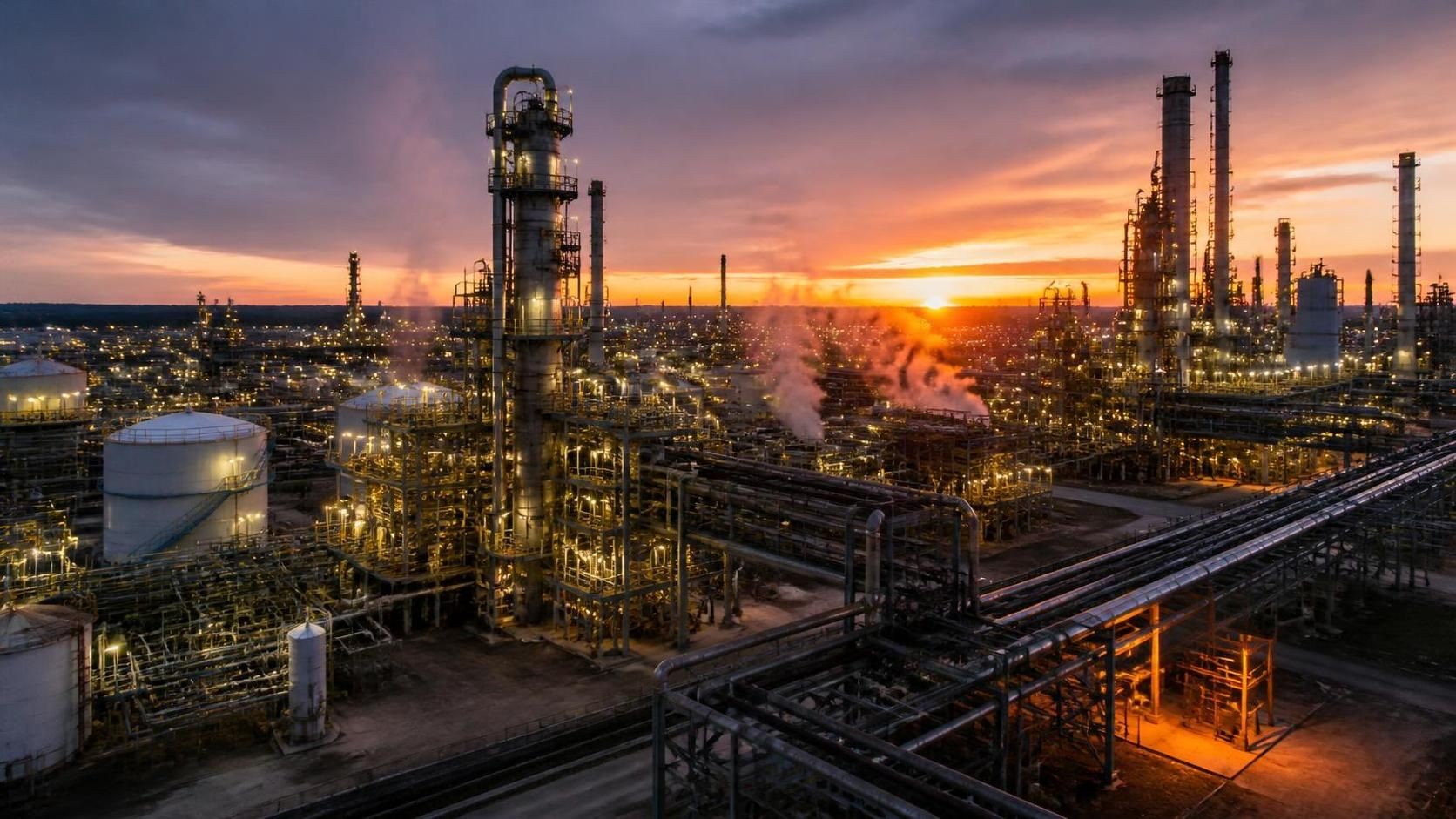
On the night of October 30–31, 2026, Ukrainian long-range drones struck the Bashneft refining complex in Ufa, in Russia’s Republic of Bashkortostan, roughly 1,400–1,600 kilometers from the front lines. The attack came as Russian forces simultaneously hit Ukrainian energy infrastructure, leaving hundreds of thousands of households without power as winter approaches.BloombergKyivpost
Bloomberg reported that Ukraine targeted the Bashneft facilities in Ufa while Kyiv and other areas worked to restore electricity after overnight Russian strikes. Russian officials have not confirmed significant damage. Rosneft, which controls Bashneft, did not immediately comment.Bloomberg
Damage at the Ufa Complex
Ufa hosts three adjacent Bashneft plants—Bashneft-Ufaneftekhim, Bashneft-Novoil (also called Novo-Ufimsky), and Bashneft-UNPZ—with a combined crude processing capacity of about 23.5 million metric tons per year (roughly 460,000–470,000 barrels per day). The complex produces gasoline, diesel, jet fuel, lubricants, and other products for both civilian and military use.Kyivpost
OSINT analysts and local reports indicated a major fire at Bashneft-Novoil, with the L-35 catalytic reforming unit likely involved. This unit produces high-octane reformate for gasoline blending and hydrogen needed for hydrotreating and desulfurization. Without it, production of modern high-grade motor fuels is severely impaired. Some monitoring channels reported activity at a second plant as well. Residents filmed drones overhead and rising black smoke; Russian air defenses claimed to have intercepted hundreds of drones (one figure cited 433 across multiple regions), with authorities describing limited effects from debris.Kyivpost
The Ufa cluster has been hit repeatedly in 2026, including in April, June, and August. Earlier strikes damaged primary distillation and other units. The latest attack ends a roughly two-week lull in confirmed Ukrainian refinery strikes that began around mid-October, coinciding with U.S. pressure for an informal “energy ceasefire.” The pause was broken first by strikes on Rosneft’s Novokuibyshevsk refinery in Samara on October 30, which Russian Deputy Prime Minister Alexander Novak acknowledged involved three refineries and a gas-chemical complex (with “minor damage” at one site).Intellinews
Russian Strikes on Ukraine’s Power Grid
In parallel, Russia struck Ukrainian combined heat and power plants, electrical substations, gas distribution facilities, and rail infrastructure. Targets included a CHP plant in Kyiv, four substations in the Dnipro region, a CHP in Shostka, and other sites. President Volodymyr Zelenskyy stated that roughly 280,000 households lost power—about 200,000 in the Dnipro region and more than 80,000 in the Kyiv region. Emergency power cuts and scheduled outages of up to 10 hours were reported in multiple areas as crews worked to restore service.Kyivpost
These attacks continue a pattern of Russian efforts to degrade Ukraine’s energy system ahead of winter.
Russia’s Refining Capacity Hits Over the Last Six Months
Ukraine’s campaign against Russian refineries intensified through 2026. According to the International Energy Agency (IEA), in the first eight months of the year a Russian refinery was hit on average once every three days. By late October, 28 of 32 major refineries (those with at least 40,000 b/d capacity) had been struck, with more than 200 confirmed drone and missile strikes tracked. Only plants deep in eastern Siberia and the Far East (3,500–6,500 km from Ukraine) remained largely untouched.Iea
Russian crude throughput fell to about 3.8 million barrels per day in June—the lowest in more than 20 years and roughly 30% below year-earlier levels—against installed capacity of roughly 6.5 million b/d and typical pre-crisis runs of 5.3–5.5 million b/d. Gasoline output dropped around 20% and diesel nearly 30% at peaks relative to 2025. Secondary units (catalytic reformers, hydrotreaters, FCC units) have been frequent targets because they are harder and slower to repair than primary distillation units.Iea
Estimates of offline capacity have varied widely. Ukrainian claims have reached 40–51% at various points. Independent analyses (including from Kpler and others) have pointed to high downtime figures in the summer, with effective processing capacity offline in the range of 1.5–2 million b/d or more at times. Russian officials have cited far lower numbers (around 10% under repair). Tracking is complicated by a September 2026 decree restricting publication of refinery throughput and product sales data. Missile War Monitor ledgers recorded 22 dated strikes in August, 16 in September, and fewer in October amid the mid-month pause, before the late-month resumption.Intellinews
During the late-October pause, Russian refineries increased processing by roughly 25%, reaching around 5 million b/d in the second half of the month, according to industry sources. Diesel production also rose. The new strikes on Samara and Ufa interrupt that recovery.Reuters
Export Limits Remain in Place
Yes, Russia continues to limit oil product exports. Gasoline export bans have been in force for months. The diesel export ban, introduced amid shortages, is being extended through the end of 2026 (or into January 2027), while the government is expanding a quota system for selected refiners. Quotas are set to rise substantially in November (to about 2 million metric tons, or roughly 0.5 million b/d—quadrupling prior levels in some accounts) to help fulfill a diesel supply arrangement discussed with the United States. Shipments under existing intergovernmental agreements continue. Petrol restrictions remain stricter, and some regions still face tight supplies or rely on imports despite partial recovery.Reuters
Domestic shortages earlier in 2026 prompted rationing, longer queues, relaxed fuel-quality standards, and large subsidies to oil companies. Global diesel markets felt the effects of reduced Russian exports.
The mutual energy strikes underscore the ongoing campaign by both sides to degrade the other’s ability to sustain operations and generate revenue. Ukraine’s deep-reach capability continues to pressure Russian refining and domestic fuel balances, while Russia’s grid attacks aim to impose costs on Ukrainian civilians and infrastructure heading into winter. The late-October resumption of refinery strikes, after a brief lull linked to U.S. political timing, indicates the energy dimension of the conflict remains active.
Check out the World’s Greatest Podcast Show Notes at EnergyNewsBeat.co or EnergyNewsBeat.com. And subscribe to: The Energy News Beat Substack.
Appendix: Sources and Links
- Bloomberg: “Ukraine Strikes Bashneft Refineries as Russia Attacks Power Grid” (October 31, 2026). https://www.bloomberg.com/news/articles/2026-10-31/ukraine-strikes-bashneft-refineries-as-russia-attacks-power-grid
- Kyiv Post: “Drones Hit Bashneft-Novoil Refinery in Ufa” (October 31, 2026). https://www.kyivpost.com/post/88737
- Kyiv Post: “Russian Energy Strikes Cut Power to 280,000 Across Ukraine” (October 31, 2026). https://www.kyivpost.com/post/88748
- IEA: “Russian refining sector struggles amid intensifying Ukrainian attacks” (September 17, 2026, updated data through late October). https://www.iea.org/commentaries/russian-refining-sector-struggles-amid-intensifying-ukrainian-attacks
- Reuters: “Russian oil refineries boost output as drone attacks halt after US-brokered deal, sources say” (October 27, 2026). https://www.reuters.com/business/energy/russian-oil-refineries-boost-output-drone-attacks-halt-after-us-brokered-deal-2026-10-27/
- Reuters: “Russia to extend diesel export ban, use quotas to fulfil US deal, sources say” (October 29, 2026). https://www.reuters.com/business/energy/russia-extend-diesel-export-ban-use-quotas-fulfil-us-deal-sources-say-2026-10-29/
- bne IntelliNews / Missile War Monitor reports on refinery strike ledgers and capacity status (late October 2026). Examples: https://www.intellinews.com/ukraine-targets-three-russian-refineries-as-two-week-strike-lull-ends-480486/ and related coverage.
- Additional reporting from Militarnyi, Euromaidan Press, Kyiv Independent, The Moscow Times, and OSINT channels (Exilenova+, Astra) documenting specific unit damage, smoke, and prior strikes on the Ufa complex.