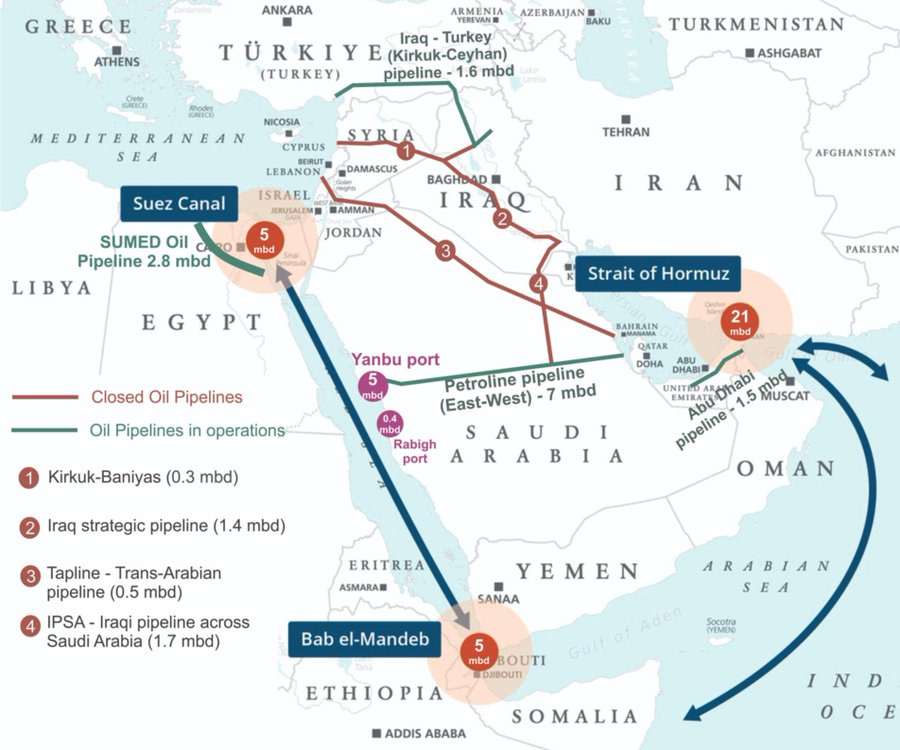
What a wild day, and last night’s President Trump speech left people scratching their heads. If you are a country pursuing Net Zero, you hear “Go Get Your Own Oil.” There is only one problem. None of them has any military capability to keep the Strait open.
So the world is facing a huge split in the road. The countries that will follow Net Zero and double down on wind and solar, or you will see others turning on coal, nuclear, and natural gas, and not turning off their refineries. Half the US is ok, and the other half is in trouble. California is approaching a National disaster, and we have more on that later.
1. Strait of Hormuz Closure & Global Energy Disruption
The transcript extensively covers Iran’s de facto closure of the Strait of Hormuz and its cascading effects on global energy markets. This disruption affects the flow of oil, liquefied natural gas, fertilizers, and other critical commodities worldwide, causing price spikes and supply shortages. The discussion includes impacts on Asia, Europe, and the Philippines, as well as commentary on U.S. policy responses.
2. European Union Energy Crisis
The EU’s energy policies are examined, particularly initiatives like “RePower EU” and the “Clean Industrial Deal.” The transcript questions the feasibility of these plans given Europe’s reliance on fossil fuels and challenges in transitioning to renewables. There’s concern about an “energy lockdown” resulting from the Gulf-Iran conflict.
3. California’s Energy Crisis
California’s energy landscape faces multiple challenges, including refinery shutdowns, grid instability, renewable energy integration difficulties, and high electricity prices. The transcript raises questions about the state’s energy management and potential national security implications.
4. Redefining Levelized Cost of Energy (LCOE)
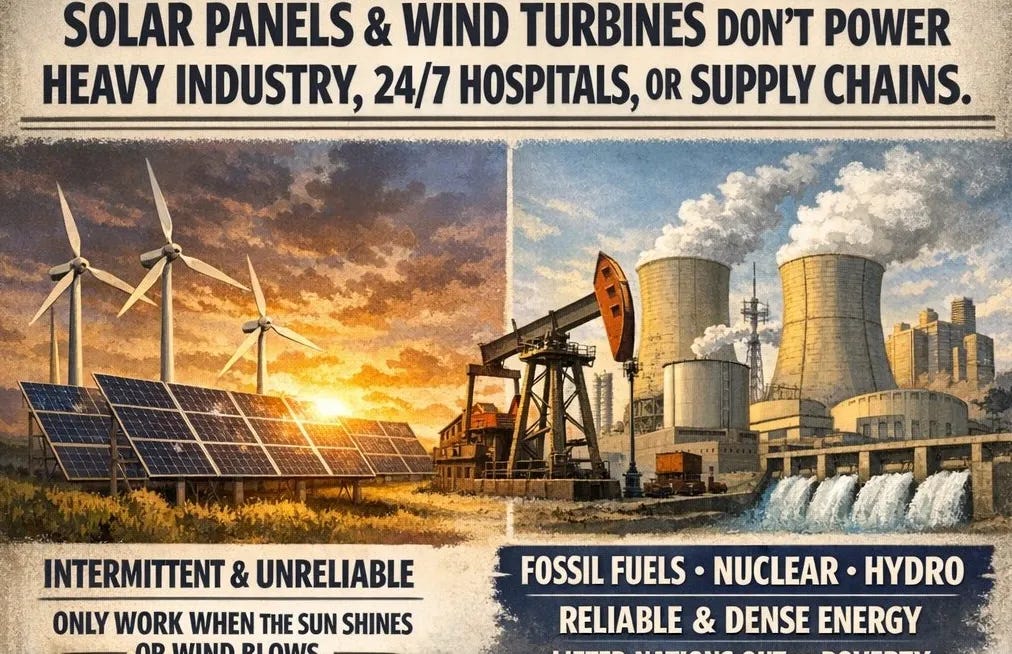
The discussion highlights the need to recalculate LCOE metrics to accurately reflect the true costs of renewable energy integration, including storage and grid resilience—suggesting current calculations underestimate transition costs.
5. Energy Market Performance & Investment Opportunities
The Podcast covers current energy sector stock performance, with oil, gas, and refinery companies outperforming broader markets, and discusses investment strategies like covered calls.

1.How will President Trump handle the Pressure on the global markets?
How will President Trump handle the Pressure on the global markets?
How will President Trump handle the Pressure on the global markets?
President Trump’s blunt March 31, 2026, Truth Social post — “go get your own oil” — has sent shockwaves through global energy markets already reeling from the Iran conflict and the closure of the Strait of Hormuz. With U.S. gasoline prices topping $4 a gallon, diesel costs surging worldwide, and supply-chain chaos spreading from Asia to Europe, the question on every trader’s and policymaker’s mind is simple: Can Trump really walk away from the world’s most critical oil chokepoint, and what happens if he does?
I reached out to veteran Mideast energy journalist Natasha Turak (formerly CNBC, FT) for her take, and she delivered a sharp, fact-packed video analysis that cuts through the spin. I’m thrilled she’s agreed to join us on the Energy News Beat Podcast soon to dig even deeper. In the meantime, here’s a clear-eyed breakdown of her report, the crisis points she flags, and the real options now on the table for the Trump administration.
Natasha Turak’s Video Summary: “Trump said ‘go get your own oil.’ Can he really afford to walk away from the Strait?”In her 2:51 video posted April 1, Turak walks viewers through Trump’s stance: the U.S. imports almost no oil via Hormuz and has “nothing to do” with reopening it. Allies and importers should either buy American crude or muster the courage to secure the strait themselves. Trump has even suggested the waterway might “open up naturally” once Iran needs export revenue again.
Turak’s verdict? Yes, Trump can walk away — but the blowback will be enormous. The closure has already triggered the largest energy supply shock in history, and the pain is global and immediate. Even if the war ended tomorrow, prices would stay elevated for weeks or months because of logistics, insurance, and rerouting realities. Turak promises a follow-up on why the lag exists; for now, she paints a vivid picture of a world scrambling for fuel.
2.DAVID BLACKMON: Strait Of Hormuz Closure Impacts Much More Than Just Oil
Great job David, and check out the Story on the Daily Caller, or on his Substack David Blackmon’s Energy Additions
4.The Strait of Hormuz’s Bitter Lesson for the European Union

5.Energy News Beat Exclusive: 10 Hard-Hitting Stories on California’s 2026 Energy Crisis
We have been talking about the Energy Crisis in California for years, and now it is no longer an energy crisis. It is a national security risk to the entire Republic. Don’t take our word for it, but let’s look at 10 other huge stories from other publications. Stu Turley, David Blackmon, and Mike Ariza will be covering these and other stories on Friday on the Energy News Beat Podcast. And the cover picture sums up Gavin Newsom’s mind. The background of windmills and solar panels, and he is standing, looking more like Forest Gump, trying to plug in an EV next to a non-permitted oil well. – Just saying.
1. California’s Refinery Meltdown:
Losing 20% of Fuel Capacity While Gas Hits $5.30+California is staring down a self-inflicted fuel crisis. Valero’s Benicia refinery (170,000 bpd) is set to close in 2026, joining Phillips 66’s recent LA shutdown. That’s roughly 17–20% of in-state refining capacity gone in months. Gasoline prices are already topping $5.30/gallon statewide, and Chevron is warning of shortages that could leave San Francisco and Los Angeles without jet fuel.
The state’s 2045 fossil-fuel phase-out dream collides with reality: electrification + AI data centers are driving demand higher, not lower. Result? An “energy island” with fewer refineries, captive consumers, and no easy imports.
This isn’t market failure. It’s a policy failure.
Appendix – Bloomberg (Mar 24, 2026), CalMatters (Mar 13, 2026), Energy In Depth (Mar 31, 2026).
2. $5+ Gasoline & Sky-High Electricity: How Green Mandates Made California’s Energy Bill the Nation’s Worst
Residential electricity now averages ~30–36¢/kWh in California — 74% above the national average. Gasoline spikes are the latest symptom. Refinery closures + seasonal blend changes + wildfire-driven PSPS shutoffs have left the system with zero margin.
Cities like Petaluma and Morgan Hill just rolled back natural-gas bans after DOJ lawsuits proved the policies illegal and unaffordable. Even blue-city officials are admitting what physics already knew: you can’t electrify everything when the grid can’t keep up.
Appendix – EIA (Jan 2025 data updated 2026), Energy In Depth (Mar 31, 2026), OC Register (Feb 15, 2026).
3. Grid on the Brink: AI Data Centers + Electrification = 53% Demand Surge by 2045
Peak electricity demand is exploding from EVs, building electrification, and data centers. CEC now forecasts a 53% jump by 2045. Yet solar floods the midday market and disappears at dusk, leaving batteries (which catch fire — Moss Landing, Otay Mesa, Escondido) as the unreliable “solution.”
CAISO is scrambling with reliability-focused transmission, but the numbers don’t lie: the state is one multi-day heat wave or wildfire away from rolling blackouts.
Appendix – CEC (2026 outlook), Utility Dive (Feb 10, 2026), EDF Climate 411 (Feb 6, 2026).
4. Planned Power Shutoffs Are Back — And Schools Are Paying the Price
Southern California Edison’s Public Safety Power Shutoffs (PSPS) hit schools hard in 2024–2025 and are ramping up again in 2026. Riverside County districts lost class time, spent thousands on generators, and still face wildfire-risk blackouts.
This is the new normal: aging infrastructure + intermittent renewables = preemptive outages that hurt the very people green policy claims to protect.
Appendix – CalMatters (Feb 25, 2026), LAist (Feb 2026).
5. Nevada Just Cut the Cord: California’s Import Dependency Exposed
NV Energy told Liberty Utilities it will stop exporting power after May 2027 to protect its own customers and new industries. California’s “energy island” just lost another lifeline.
While the state lectures the world on net-zero, it quietly begs neighbors for power it refuses to build domestically.
Appendix – Energy News Beat (Mar 20, 2026).
6. Diablo Canyon Extension: The Nuclear Lifeline Politicians Tried to Kill
Newsom signed SB 846 to keep Diablo Canyon running until 2030 — reversing earlier closure plans. It’s California’s largest source of clean, dispatchable power, yet environmental groups still fight it. Without it, 2026 summer peaks would have been catastrophic.
One plant saved the grid. Imagine what new nuclear could do.
Appendix – Grok/X context + CEC reports.
7. Battery Fires & Solar Duck Curve: The Expensive Reality of “Clean” Energy
Moss Landing (300 MW) burned for days in early 2026; Otay Mesa and Escondido fires preceded it. Batteries cost billions, last only 4 hours, and still need gas peakers for the rest of the day. Solar output crashes exactly when demand peaks.
Ratepayers foot the bill for both the hardware and the backups.
Appendix – Multiple 2025–2026 fire reports + CAISO data.
8. National Security Threat: California’s Fuel Crisis Endangers Military Jet Fuel Supply
Valero’s closure directly hits military readiness. California supplies jet fuel for bases across the West. Chevron’s refinery chief called shortages his “worst fear.”
When your energy policy threatens national defense, it’s no longer just an environmental debate.
Appendix – National Today (Feb 27, 2026), Moneywise (Jan 2026).
9. Cities Roll Back Gas Bans: Even Progressives Admit the Electrification Dream Is Cracking
Petaluma and Morgan Hill repealed natural-gas hookup bans after DOJ intervention. High electricity prices (30¢+/kWh) made all-electric mandates unaffordable for working families.
The quiet admission that physics and economics still matter.
Appendix – Energy In Depth (Mar 31, 2026).
10. California’s Energy Transition Is Failing the Middle Class — Time to Admit It
Demand is rising, not falling. Refineries are closing. Rates are soaring. Blackouts loom. Yet Sacramento doubles down on 2045 mandates.
This isn’t a “transition.” It’s a controlled demolition of affordable, reliable energy — exactly like Germany’s Energiewende disaster.
Appendix – OC Register (Feb 15, 2026), Compton Chamber (Jan 2, 2026).Quick Interview Prep for Tomorrow (April 3, 2026) Open with: “Refineries closing, prices spiking, grid straining — California engineered this crisis.”
Key questions for guests: “Why keep shuttering refineries while demand explodes?” “How many more battery fires before we admit storage isn’t a silver bullet?” “At what point does national security trump ideology?”
Hammer the contrast: Germany blew up plants; California is shutting refineries and banning gas. Same ideology, same pain.
At some point, we have to ask whether Gavin Newsom is just the Forest Gump of Governors, or if he’s corrupt and this is intentional? I would posit that an audit of his bank accounts would determine whether he is “Energy Gump-like” or Corrupt.
6.The Redefining of Levelized Cost of Energy Needs to Be Implemented to Lower Energy Prices
Check out this on the Energy News Beat Substack
Energy investors are finally getting their moment in the sun — and it’s not even close. While the broader S&P 500 is down 4.6% year-to-date in 2026, the S&P 500 Energy Sector has exploded higher by 36.5%, posting its widest outperformance margin on record. The sector just notched a 14-week winning streak — smashing the previous nine-week record set in 2007 during a 50% oil-price surge tied to Middle East chaos.
This isn’t a fluke. It’s the direct result of geopolitics, disciplined capital spending, and a surging AI-driven power demand that’s rewriting the long-term energy playbook. Oil & gas companies — from upstream majors to refiners and LNG exporters — are delivering the kind of shareholder returns the rest of the market can only dream about right now.
The Numbers Don’t Lie: Energy Is Crushing Everything Else
S&P 500 Energy Sector: +36.5% YTD
S&P 500: –4.6% YTD
Tech Sector: –10.0% YTD
Utilities: +7.5% YTD
Consumer Staples: +7.0% YTD
Even the “safe haven” sectors are eating dust while energy rips higher.
U.S. Oil Majors Leading the Charge Occidental Petroleum (OXY): +49.6%
Marathon Petroleum (MPC): +43.8%
ConocoPhillips (COP): +35.8%
ExxonMobil (XOM): +33.1%
Chevron (CVX): +28.5%
These aren’t one-off pops. They’re backed by high free-cash-flow yields, capital discipline, and the simple reality that global supply is tighter than markets expected.
Refiners: The Quiet Winners in a Volatile Year
U.S. refiners have been standout performers as crack spreads widened and discounted heavy crude (thanks to geopolitical shifts) flowed in. Marathon Petroleum (MPC): +43.8% YTD — with Q4 refining margins hitting $18.65/bbl (up 50% YoY) and 95% utilization.
Valero Energy (VLO): +25–48% in early 2026 updates, record throughput of 3.1 million bpd.
Phillips 66 (PSX): Strong double-digit gains, record 88% clean product yield and 99% utilization.
Wall Street is still catching up — institutional money has piled into these names while analyst ratings lag the actual price action.
LNG: Geopolitical Chaos = Massive Tailwind for U.S. Exporters
The Strait of Hormuz disruptions (roughly 20% of global LNG supply at risk) have sent Asian spot prices soaring 140% and European benchmarks up 50–85%. U.S. LNG is stepping in as the reliable alternative. Cheniere Energy (LNG): +42–52% YTD, repeatedly hitting all-time highs near $299–$300/share. The company exported a record 670 cargoes in 2025, with 95%+ of capacity under long-term contracts. Corpus Christi Stage 3 expansion is ramping fast.
Cheniere’s contracted portfolio shields it from spot volatility while still letting it capture higher pricing on uncontracted volumes — plus a $10B share-buyback program through 2030.
Why Now? Three Forces Converging
Middle East Supply Shock: 7.4–8.2 million bpd offline (Iraq –2.9 mb/d, Saudi –2.0–2.5 mb/d, etc.). No quick fix without easing the Hormuz situation.
Investor Rotation: Tech’s bubble has popped; capital is rotating into undervalued, high-yield energy names.
AI & Data-Center Boom: U.S. AI power demand is projected to grow 30-fold by 2035 (4 GW → 123 GW). Global data-center electricity use will more than double by 2030 — four times faster than the rest of the economy. That means more natural gas, more LNG, and even more upside for nuclear and renewables as backup.
Oil & gas companies aren’t just riding a price spike — they’re positioned for a multi-year structural shift.
Bottom Line: While politicians in California and Europe chase Net Zero fantasies that shutter refineries and kill domestic production, U.S. energy companies are proving once again that energy dominance starts at home. The rally isn’t over — it’s just getting started.
Energy News Beat will keep tracking every barrel, every cargo, and every basis point. Because in energy, the numbers never lie.
Also, a shout-out to our great Sponsors:

A shout-out to Steve Reese and the Reese Energy Consulting group for sponsoring the Podcast https://reeseenergyconsulting.com/.

A shout-out to our New Sponsor, Data2 – We will be running an AI Centered Series and have lots of data rolling out!. https://www.data2.ai/resources/the-decision-lag-report

And we have WellDatabase rolling in as a new sponsor.
Get your CEO on the podcast: https://sandstonegroup.us/contact-us/
Get the latest energy updates — follow Energy News Beat on Substack: https://theenergynewsbeat.substack.com/