

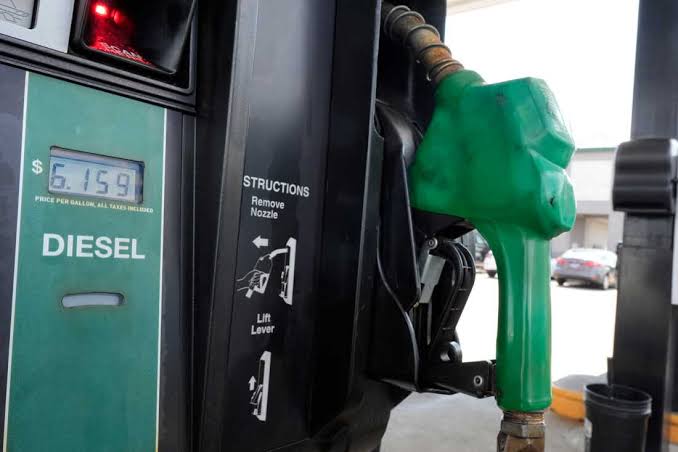
The September 2026 Consumer Price Index delivered a clear message: energy prices—especially gasoline and diesel—drove the latest inflation jump. Headline CPI rose 0.6% month-over-month and accelerated to 3.7% year-over-year, up from 3.4% in August, according to the Bureau of Labor Statistics.Bls
Gasoline prices surged 9.1% in a single month and accounted for more than half of the overall monthly increase.CBS News
This aligns closely with analysis shared by commodities trader Jack Prandelli, who highlighted the same figures: U.S. inflation reaching 3.7%, gasoline jumping 9.1%, oil remaining elevated above $100 at points due to the ongoing U.S.-Israeli conflict with Iran, and diesel at record highs. Prandelli noted the spillover effects into airline fares and the potential for higher trucking costs to feed into grocery prices, while observing that a rate hike is back on the table for the Federal Reserve.X
The Numbers and the Energy Channel
The BLS report confirmed energy as the dominant force. The energy index rose 5.2% in September (after 2.1% in August) and stands 20.4% higher than a year earlier. Gasoline is up 34.2% over the past 12 months.Bls
National average pump prices as of mid-October stood near $4.33 for regular gasoline and around $6.30 for diesel, according to AAA data—levels that reflect the geopolitical supply constraints in the Middle East.Gasprices.aaa
Core CPI (excluding food and energy) also came in hotter than expected at 0.3% month-over-month and 2.6% year-over-year, up from 2.4%. Shelter, airline fares (up 1.2% on jet fuel costs), and other categories showed firmness. Food was flat for the month, but analysts warn that elevated diesel will eventually raise the cost of moving goods.
Sonu Varghese of Carson Group observed that “CPI came in hot and it wasn’t just fuel prices, as core inflation ran at a 3.7% annualized pace in September,” adding that the full impact of higher diesel prices and the AI boom has yet to appear.CNBC
Other commentary from Reuters and market analysts noted broadening pressures beyond energy, with some items such as toys and software drawing attention amid tariffs and strong demand.
Federal Reserve Reaction
The Fed raised the federal funds rate by 25 basis points in September to a 3.75–4.00% target range—the first increase in three years—citing insufficient progress toward the 2% inflation goal. The September Summary of Economic Projections showed a large majority of participants expecting at least one more hike by year-end.AP News
Post-CPI, market pricing shifted. Odds of a hike at the October 27–28 meeting moved toward roughly even, up sharply from the low-20% range beforehand, while probabilities of at least one additional increase by December remained high.Reuters
Citigroup flipped to expecting a December hike. New York Fed President John Williams has indicated one more increase this year is appropriate under his baseline, though he does not see a need for further hikes in 2027. Other officials, including Governor Christopher Waller, have stressed flexibility on timing while acknowledging that additional firming is likely needed if data continue to show elevated inflation.Bloomberg
Fed Chairman Kevin Warsh has emphasized that inflation remains too high and that policymakers require confidence it is moving toward the target at sufficient speed. Officials are watching whether energy effects remain temporary or become embedded through second-round impacts on core prices and expectations.
Historical Parallels: Supply Shocks, Rate Hikes, and Recessions
History shows that major energy supply disruptions—not pure demand surges—have repeatedly been followed by inflation spikes and, when met with aggressive rate increases, by recessions.
Economist James Hamilton’s research found that nearly every U.S. recession since World War II was preceded by a sharp rise in crude oil prices, typically with a lag of about nine months. The major episodes were driven by geopolitical supply cuts rather than booming demand alone.Jstor
- 1973–74 OAPEC embargo: Arab oil producers cut supply to the United States in response to support for Israel. Oil prices roughly quadrupled. Inflation accelerated, the Fed under Arthur Burns raised rates sharply, and a deep recession followed in 1973–75. Equity markets fell nearly 50% at their worst.
- 1978–79 Iranian Revolution and subsequent Iran-Iraq War: Iranian production collapsed, oil prices rose sharply again, and inflation moved into double digits. Paul Volcker’s Fed responded with aggressive tightening. The result was a double-dip recession (1980 and 1981–82), with unemployment peaking above 10%.
In both cases, the initial impulse was a supply restriction. The Fed’s subsequent rate increases, aimed at containing inflation expectations, further contracted demand in an already supply-constrained environment. Analyses from the period and later research (including work by Hamilton and others) note that while oil shocks reduce real incomes and disrupt key sectors such as autos and transportation, the severity of the downturn often intensified when monetary policy tightened aggressively into the shock.
Supply-driven price spikes tend to be more damaging than demand-driven ones because they raise costs without a corresponding boost to overall economic activity. Prolonged geopolitical disruptions (as seen in the 1970s and potentially today) increase the risk that second-round effects embed inflation, prompting tighter policy and raising recession odds. Short-lived spikes are more easily absorbed.
Current conditions echo elements of those earlier episodes: a geopolitical conflict constraining Middle East supply, oil well above pre-conflict levels, record diesel prices feeding into logistics, and a central bank that has already begun hiking and is debating further increases. The key open question is whether energy effects remain largely temporary (as gasoline can reverse quickly if supply normalizes) or broaden further into core services, goods, and expectations.
Markets and the Fed will watch the next data points closely—particularly whether core inflation continues to accelerate and whether energy costs stabilize or worsen. History suggests that responding to a supply-side energy shock primarily with demand-side rate increases carries meaningful risks of amplifying an economic slowdown.
Check out the World’s Greatest Podcast Show Notes at EnergyNewsBeat.co or EnergyNewsBeat.com. And subscribe to: The Energy News Beat Substack.
Appendices
At Energy News Beat we Make Appendices Great Again.
- Jack Prandelli post: https://x.com/jackprandelli/status/2110390622271987994
- BLS September 2026 CPI release: https://www.bls.gov/news.release/cpi.nr0.htm
- CBS News: https://www.cbsnews.com/news/september-cpi-report-inflation-energy-costs/
- CNBC CPI coverage: https://www.cnbc.com/2026/10/14/cpi-inflation-report-september-2026.html
- Reuters on Fed odds: https://www.reuters.com/markets/us/fed-rate-hike-seen-more-likely-after-inflation-data-2026-10-14/
- AAA fuel prices: https://gasprices.aaa.com/
- James Hamilton, “Oil and the Macroeconomy since World War II,” Journal of Political Economy (1983): https://www.jstor.org/stable/1832055
- Hamilton, “Historical Oil Shocks,” NBER Working Paper 16790: https://www.nber.org/papers/w16790
- Additional Fed comments and minutes coverage: AP News, CNBC, Bloomberg transcripts referenced in reporting
(Note: Oil prices and exact market odds fluctuate; figures reflect data available as of mid-October 2026.)