

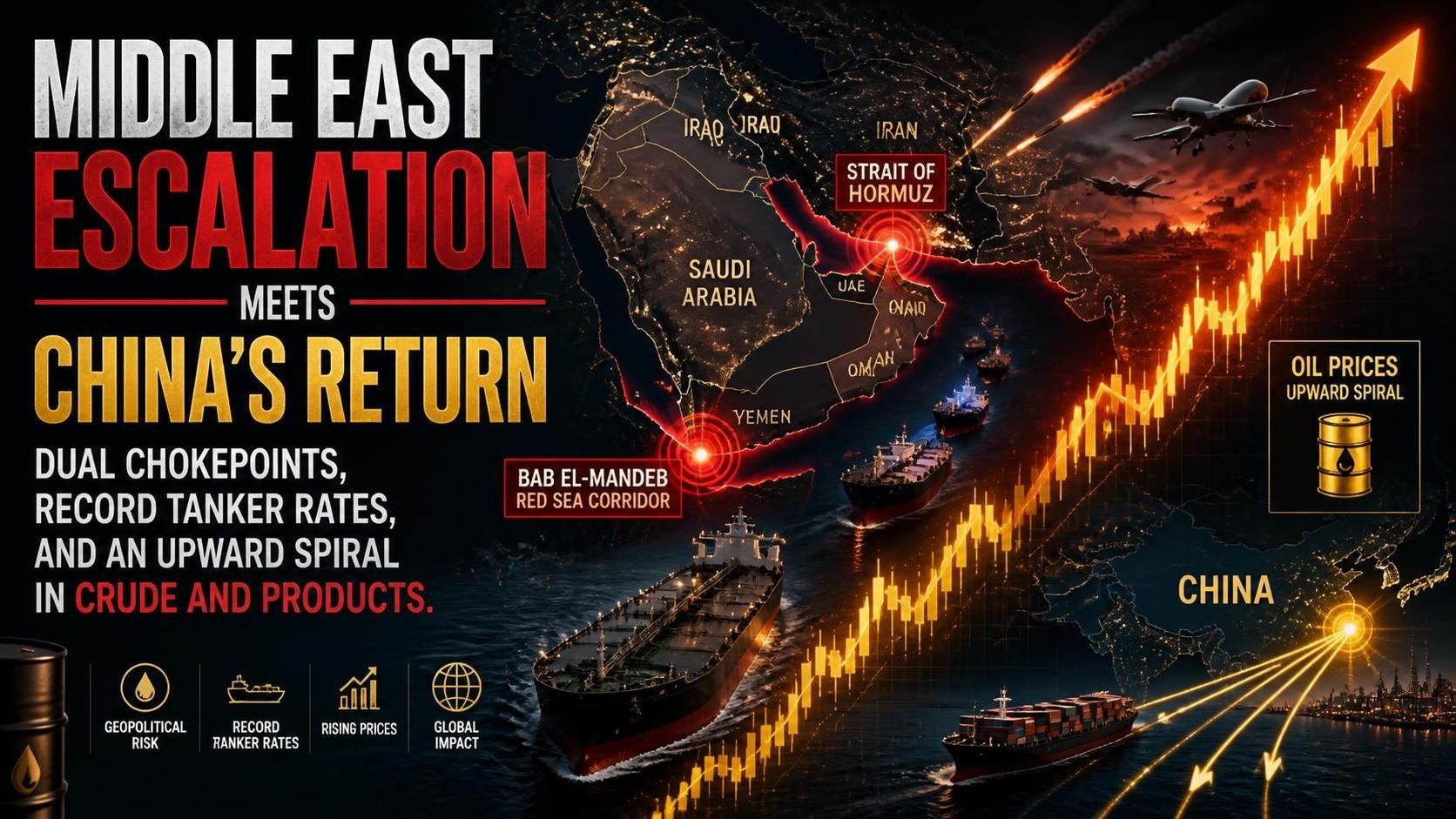
The Middle East energy map tightened sharply over the past week even as China resumed heavier crude buying. Houthi forces seized key Red Sea positions including Mocha and Perim Island, tightening control over the Bab el-Mandeb Strait and targeting Saudi-linked vessels. Drones originating from Iraq struck Saudi Arabia’s East-West pipeline, prompting a precautionary shutdown of the kingdom’s main Hormuz workaround. The Strait of Hormuz remains effectively closed to most commercial traffic after nearly 200 days of disruption. At the same time, inventories have drawn rapidly, and China is importing more than it did during the spring slump. The result is a physical market that analysts say can no longer balance on crude prices alone.
The X Posts: Geopolitical Messaging and Physical Market Reality
The post from @Worldwar_3_(September 13) features a video titled “Why Did Trump Refuse Saudi Arabia? The Decision That Could Change the Middle East.” A quoted reply frames U.S. inaction on Houthis taking Mocha as a deliberate signal: Arab states can no longer fence-sit or free-ride on defense while flirting with BRICS, and China’s support for Iran will worsen its economic downturn. The account mixes breaking-news framing with broader geopolitical speculation. The video itself is commentary rather than primary reporting; it captures real-time anxiety about U.S. posture toward Riyadh amid the dual-strait squeeze but does not add new operational facts.
The second post, from @Mark4XX, is more substantive. It summarizes comments by Dr. Amrita Sen of Energy Aspects: crude can no longer serve as the market’s shock absorber. The real ceiling has always been refining margins. U.S. diesel is above $6 per gallon with cracks near $100. West-of-Suez refiners still have a margin buffer, allowing crude to rise further. Asia, however, is already cutting runs because of crude availability, not weak demand. China is buying again—well above the June slump of under 7 million bpd, with Sen citing roughly 10 million bpd for September in some comments—yet still below pre-war levels. Inventories drew 120 million barrels in two weeks. Hormuz flows remain disrupted; Yanbu loadings fell after attacks. Some reports quote freight into Hormuz and onward to Asia at around $55 million per voyage. Sen’s conclusion: an “upward spiral between crude and products.” This analysis aligns closely with contemporaneous reporting from Energy Aspects interviews.
Tanker Rates Above $800,000 per Day and Market Balance
VLCC earnings on the Baltic Exchange Middle East-to-China route (TD3C) have hit records near $800,000 per day and, in mid-September assessments, approached or exceeded $980,000–$1 million per day on some quotes. Gulf of Oman-to-Asia alternatives have also exploded, with one fixture reported near $600,000 per day. U.S. Gulf-to-Asia lump sums reached $29.5 million. These levels reflect scarce willing tonnage, war-risk premiums, and the need for ship-to-ship transfers or longer Cape of Good Hope voyages.
The market is not balancing in the traditional sense. Products, especially diesel, remain the tightest segment after Ukrainian strikes on Russian refining and reduced Gulf product exports. Crude is being pulled higher by product strength rather than acting as a buffer. Asian refiners face crude-availability constraints and are cutting runs. Western refiners can still absorb higher feedstock costs because of fat margins. Strategic stocks offer limited relief: U.S. and Japanese SPRs are at record lows, with flow-rate and quality issues; China’s commercial reserves, drawn earlier, must be rebuilt. Winter demand is approaching. High freight itself adds $10–15 per barrel or more on some routes before war-risk extras, feeding inflation in gasoline, diesel, and goods. Kpler and others expect VLCC earnings to stay elevated well into 2027.
Trump’s Comments on Zelenskyy and Russian Diesel
On September 13, while in Ireland for the Irish Open at his Doonbeg course, President Trump told reporters: “Mr. Zelenskiy has to do one thing: He has to stop knocking out diesel fuel in Russia.” He added that the administration had spoken to Zelenskyy, that there are “plenty of other targets,” and that hitting diesel “is hurting the world.” Trump attributed the global diesel shortage primarily to Russia-Ukraine rather than the Middle East conflict. U.S. national average diesel price had just exceeded $6 per gallon. Ukrainian long-range strikes have reduced Russian refining output and prompted a diesel export ban, compounding losses from Gulf product flows.
Saudi East-West Pipeline and Refinery Damage
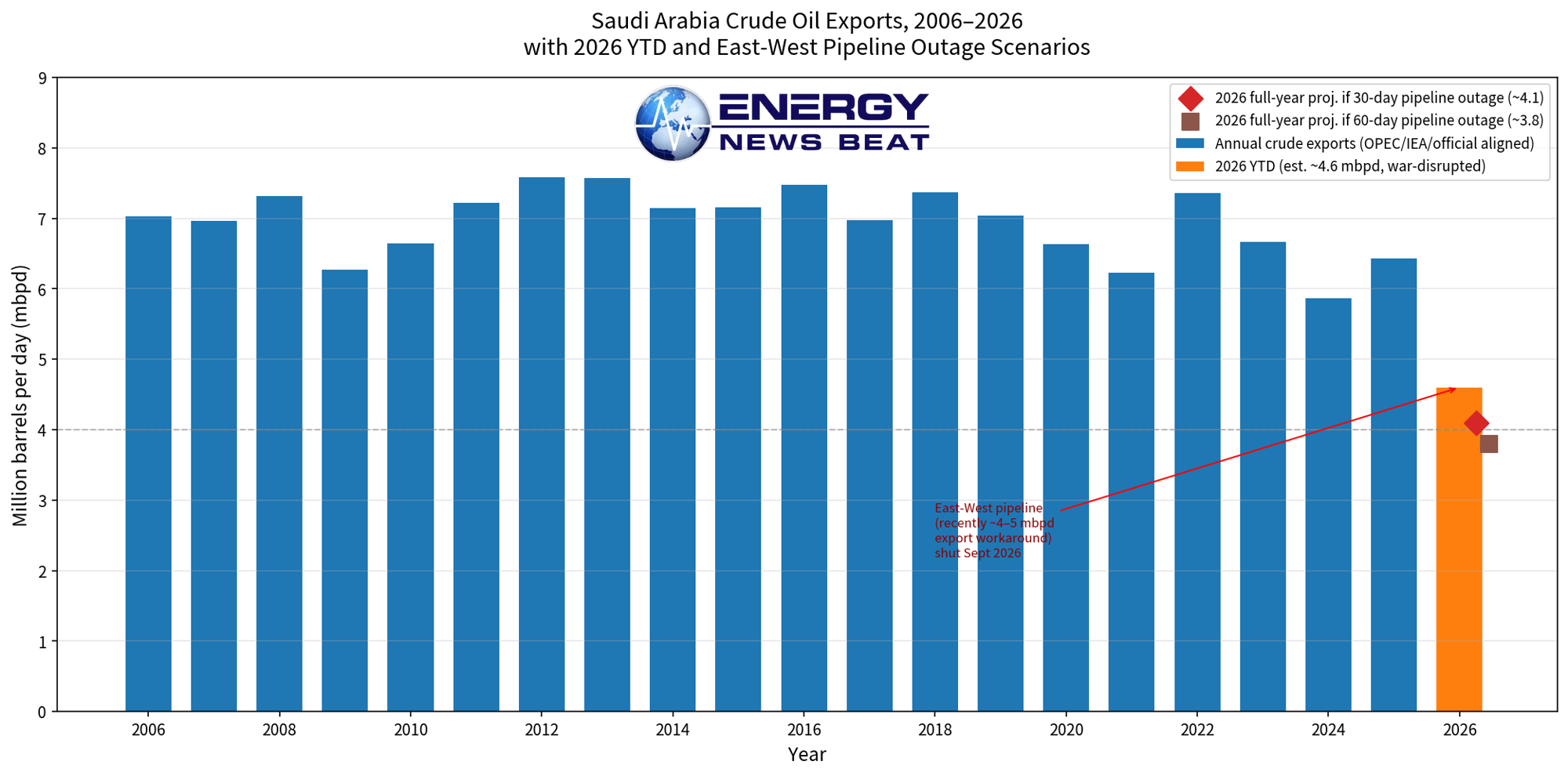
Drones from Iraqi territory struck pumping stations along the East-West (Petroline) pipeline on September 10–11 in the Riyadh and Medina regions, causing fires visible on satellite imagery. Saudi Arabia shut the 1,200 km line—capacity up to 7 million bpd, recently moving 4–5 million bpd of export crude to Yanbu—as a precaution. Yanbu stocks were estimated at only 5–7 days of exports. One industry source told Reuters repairs could take 5–6 weeks; another said partial pumping might resume sooner. A prior April strike on a pumping station was restored in three days, but current damage appears more extensive. No official timeline has been issued as of September 13. Loss of the line threatens up to 4% of global supply if stocks run out.
Houthi strikes in early September also hit energy facilities in Abha, Najran, Jazan, and Khamis Mushait, wounding dozens and causing fires. The 400,000 bpd Jazan refinery has been repeatedly targeted and taken offline for periods earlier in the year; latest attacks damaged tank farms and associated infrastructure. Operations were halted temporarily at several sites. Full restoration timelines for refineries remain unconfirmed publicly.
Saudi Arabia Production:
The Iran war has had a huge financial impact on Saudi Arabia. We are working on the details, and they will be covered in future articles. But if repairs take 5 to 8 weeks, you might want to add another 8 weeks on top of that. They will still be getting oil out through their process in the Strait of Hormuz, by using Dark Fleet tankers with transponders turned off, but this will still be crippling Saudi Arabia’s cash flow.
Bab el-Mandeb Strait Update
Houthis seized Mocha, Dhubab, and Perim (Mayun) Island, gaining territorial control over approaches to the 20–28 km strait. They declared a maritime embargo specifically on Saudi-linked vessels while claiming other traffic remains safe. Daily crossings halved in some reports (e.g., 15 versus 30 the prior day). Commodity transits and Saudi-loaded crude from Yanbu dropped sharply—roughly 50% in the days after late-July attacks in some Kpler tracking—though the corridor is not fully physically closed. Many operators now treat it as operationally hazardous and divert around the Cape. Saudi crude flows through the strait collapsed toward 400,000 bpd or lower in August tracking. LNG traffic through Bab el-Mandeb has been near zero for an extended period.
Strait of Hormuz Traffic
As of September 13, the strait is described as effectively closed for most commercial operators after 197 days, driven by insurance costs (war-risk multiples around 40 times normal) and persistent attacks. Pre-crisis traffic averaged ~85 vessels per day; recent commercial transits have been as low as 6 per day, with throughput around 7% of normal. Some estimates earlier in the summer put residual flows at 10–15 million bpd via workarounds, dark transits, Gulf of Oman STS, and limited Omani-corridor or northern-route movements, but latest figures show a sharp renewed collapse after August upticks. Qatar LNG movements remain sporadic; empty tankers have been repositioning, but regular exports through Hormuz have not normalized. Container lines have largely rerouted.
Analyst Views on Oil and LNG with Bab el-Mandeb Constrained for Saudi Arabia
Energy Aspects (Sen), Kpler, Vitol, and others describe a dual-chokepoint crisis. Hormuz disruption already removed large volumes of Middle East crude, products, and Qatar LNG. The East-West pipeline plus Yanbu-to-Bab el-Mandeb route was the primary Saudi workaround. With that route now damaged and Houthi control of the southern Red Sea, Saudi exports face longer Cape voyages, higher freight, and potential discounts demanded by Asian buyers. Product shortfalls (roughly 2 million bpd from Russia plus nearly 2 million bpd from the Gulf, per Vitol) are acute; diesel is the tightest. Asian refiners are cutting runs.
Inventories are drawing down with little buffer. LNG outages, especially from Ras Laffan damage earlier in the war, persist and keep prices elevated. Analysts see further crude and product price pressure, particularly into winter, unless diplomatic de-escalation or rapid pipeline repairs occur. China remains a swing factor: its return to buying supports prices, but it is still a disciplined buyer that can lean on inventories.
The physical market is now defined by constrained logistics rather than headline crude quotes. Record tanker rates, dual-strait risk, damaged Saudi infrastructure, and tight products create the conditions Sen described: crude and products feeding each other higher.
Stu Turley will be covering this on the Energy News Beat Stand Up later today.
Making Appendices Great Again
Appendix: Sources and LinksX posts:
https://x.com/Worldwar_3_/status/2099037867276443934
https://x.com/Mark4XX/status/2099089464752480510 Tanker rates and shipping:
https://finance.yahoo.com/energy/articles/supertanker-rates-hit-800-000-160000148.html
https://www.bloomberg.com/news/articles/2026-09-10/surging-tanker-rates-signal-a-deepening-global-energy-crisis
https://www.lloydslist.com/LL1158430/Why-VLCC-rates-just-went-ballistic-and-how-they-could-go-even-higher
https://english.elpais.com/economy-and-business/2026-09-13/wanted-oil-tankers-at-any-cost-as-tensions-in-the-gulf-trigger-a-global-scramble.html Trump remarks:
https://www.reuters.com/business/energy/trump-tells-ukraines-zelenskiy-stop-hitting-russian-diesel-2026-09-13/
https://www.pbs.org/newshour/world/trump-calls-on-ukraine-to-halt-strikes-on-russian-diesel-saying-attacks-are-causing-a-shortage
https://www.aljazeera.com/economy/2026/9/13/trump-tells-zelenskyy-to-stop-hitting-russian-diesel-supplies Saudi pipeline and refineries:
https://www.reuters.com/business/energy/saudi-pipeline-outage-threatens-loss-4-global-oil-supply-2026-09-13/
https://www.nytimes.com/2026/09/12/world/middleeast/saudi-arabia-oil-pipeline-attack.html
https://www.aljazeera.com/news/2026/9/12/saudi-arabia-shuts-critical-oil-pipeline-after-drone-attack-what-happened
https://www.cnn.com/2026/09/11/politics/saudi-arabian-oil-pipeline-hit-by-projectiles-triggering-fires
https://www.ft.com/content/d9bc67e2-97f4-47ef-8de5-1ae48d841018 Bab el-Mandeb:
https://www.thenationalnews.com/business/energy/2026/09/12/ship-traffic-in-bab-al-mandeb-strait-halves-as-houthis-seize-control-of-key-island/
https://www.channelnewsasia.com/world/saudi-arabia-yemen-houthi-rebels-bab-el-mandeb-strait-iran-war-6379486
https://www.kpler.com/blog/bab-el-mandeb-saudi-crude-loadings-cut-roughly-in-half-after-houthi-attacks-on-saudi-linked-shipping—-but-the-corridor-stays-open
https://www.cnn.com/2026/09/11/business/bab-al-mandeb-strait-houthi-global-economy Strait of Hormuz:
https://straits.live/report
https://www.kpler.com/blog/extended-conflict-becomes-the-baseline-assumption
https://windward.ai/blog/strait-of-hormuz-and-bab-el-mandeb-effectively-closed/ China buying and analyst views:
https://oilprice.com/Latest-Energy-News/World-News/Energy-Aspects-Oil-Market-Has-Reached-an-Inflection-Point.html
https://www.cnbc.com/2026/09/12/oils-roundtrip-back-to-100-why-china-could-determine-what-happens-next.html
https://www.agbi.com/analysis/oil-and-gas/2026/09/lengthy-bab-al-mandab-closure-sets-stage-for-fuel-price-crisis/
https://www.oilandgas360.com/energy-aspects-oil-market-has-reached-an-inflection-point/ Additional context: Wikipedia entries on the 2026 East-West Pipeline attack and East-West Crude Oil Pipeline; IEA and Vitol comments cited in secondary reporting.
