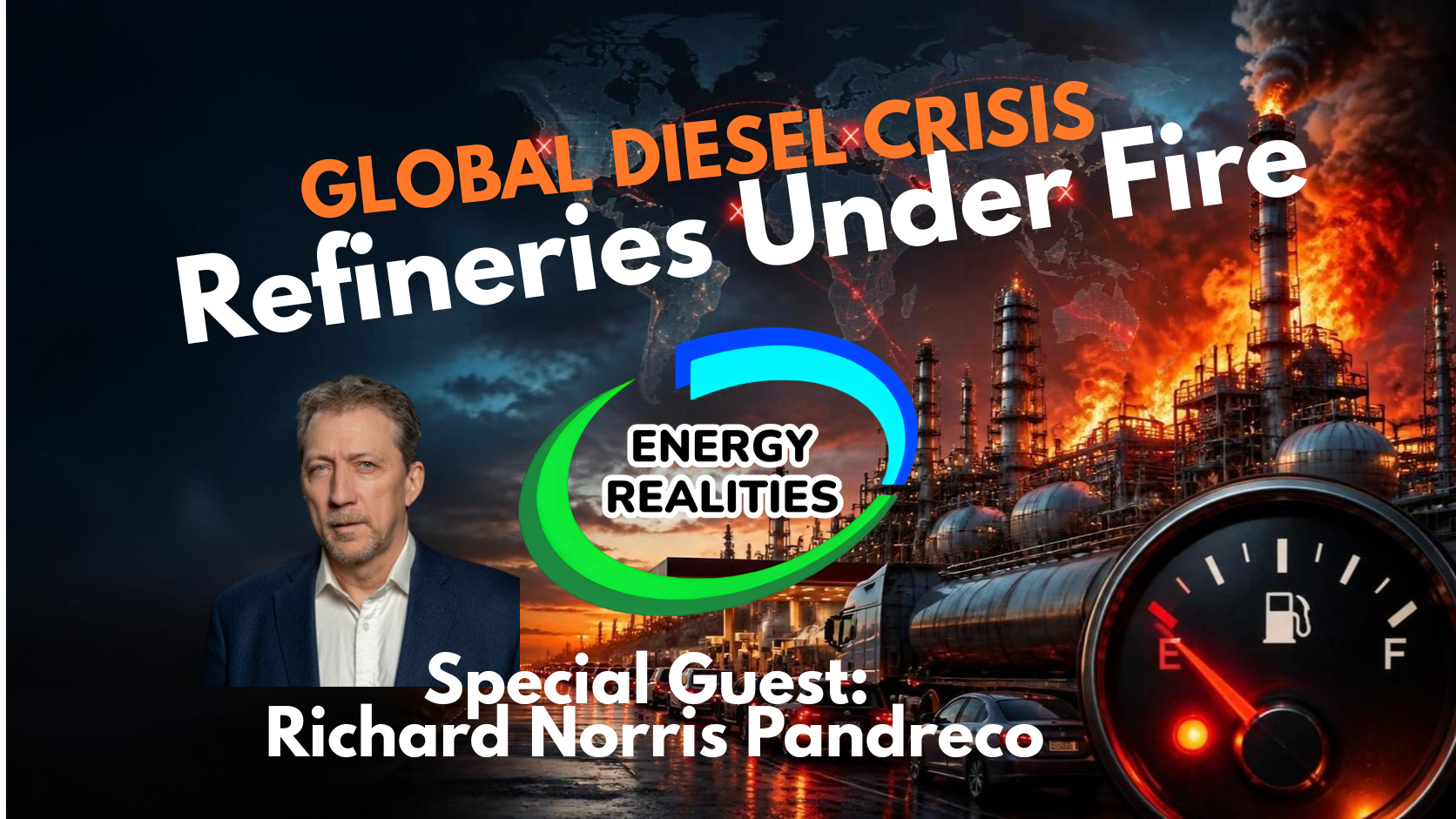
Special Guest Richard Norris Pandreco on the Energy Realities Podcast with Dr. Tammy Nemeth, David Blackmon and Stu Turley
In this episode of the Energy Realities podcast, hosts David Blackmon, Stu Turley, and Dr. Tammy Nemeth sit down with Dr. Richard Norris, managing director at Pandrako Advisors and author of the Energy IQ Substack, to unpack the perfect storm threatening global energy security.
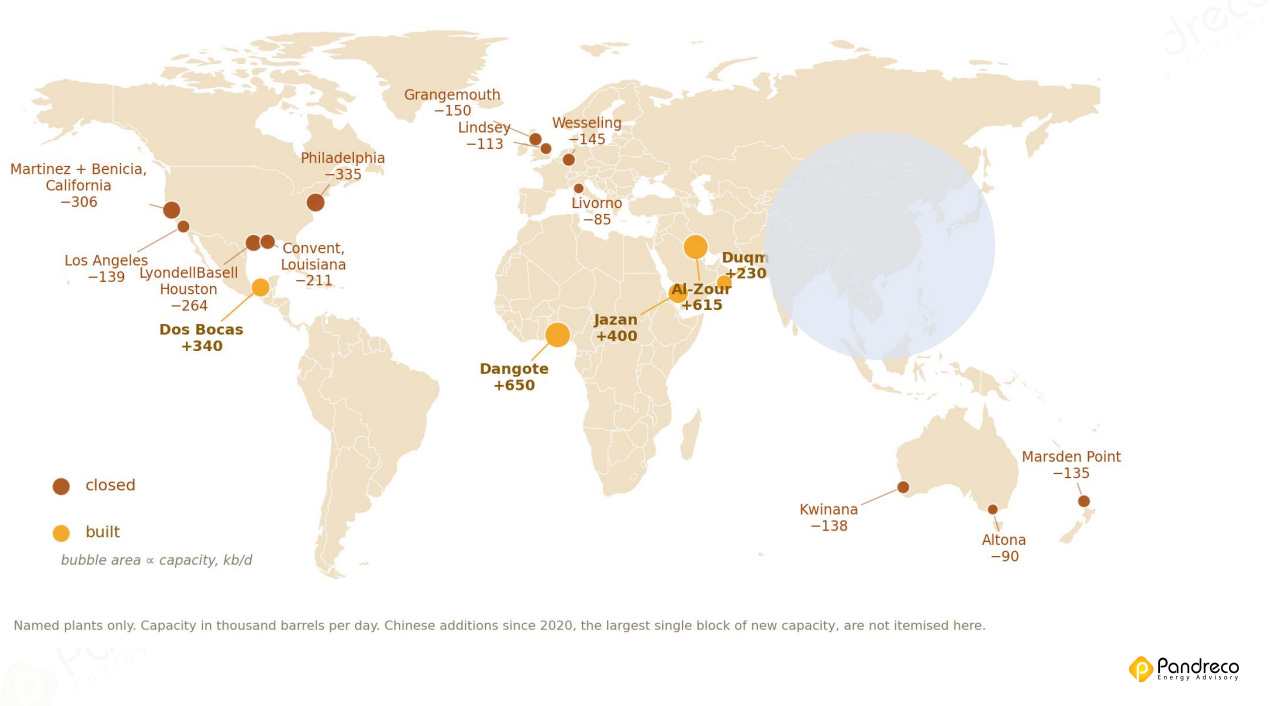
As diesel and gasoline prices spike worldwide, the conversation reveals a crisis that didn’t emerge overnight—it’s the result of decades of deliberate policy decisions to shutter Western refining capacity, compounded by wars in Ukraine and Iran, soaring tanker costs, and a financial system engineered to starve the oil industry of capital.
Through detailed analysis and sobering case studies from Europe to California to Canada, the panel explores how the world’s obsession with net-zero mandates and climate alarmism has left nations dangerously dependent on imports, vulnerable to geopolitical blackmail, and facing the hard reality that there are no quick fixes when refining capacity becomes the bottleneck in the global energy system.

1. Global Refining Capacity Crisis
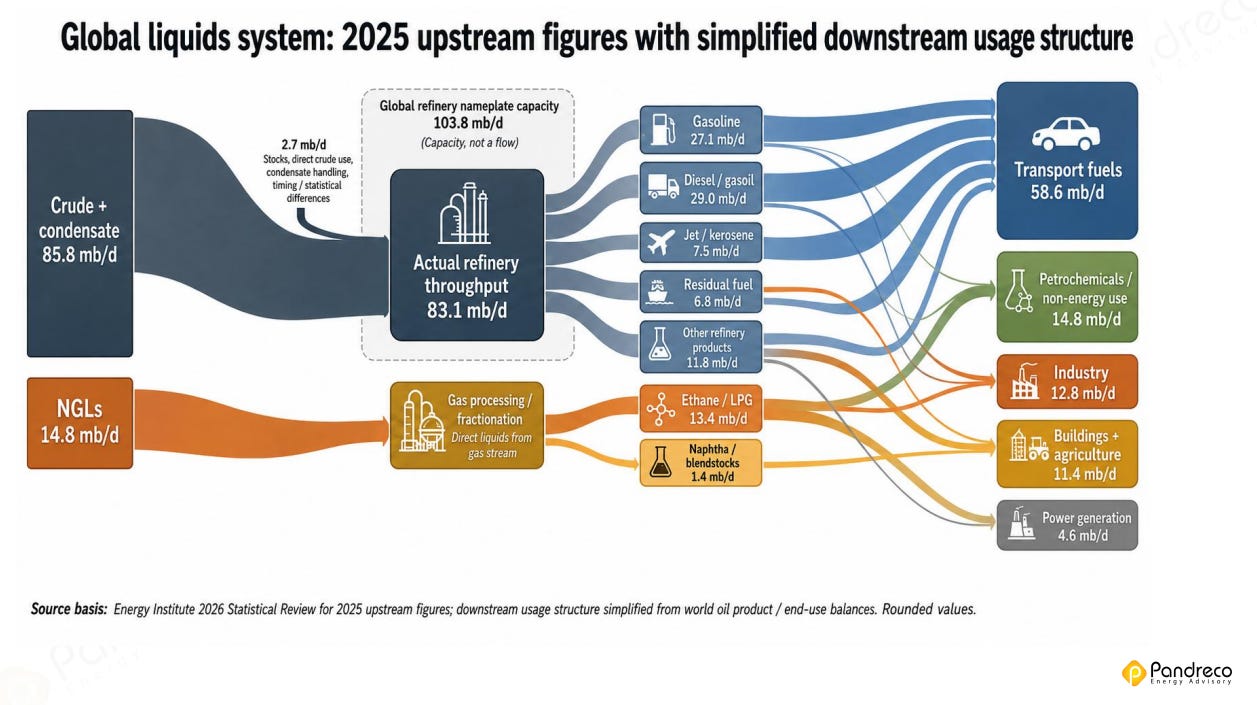
2. Historical Decline of Refining Infrastructure
3. Geopolitical Disruptions
- Ukraine-Russia War: Russia, once the world’s largest diesel exporter, has had refineries destroyed by drone strikes and is now banned from exporting
- Iran Conflict: Iranian refining capacity sits beyond the Strait of Hormuz and has been targeted, blocking both crude and refined product exports
- Tanker Route Disruptions: Longer shipping routes around the Cape of Good Hope and through contested straits have made transportation exponentially more expensive (tanker rates jumped from $25,000/day to $1 million/day)
- Refineries are running harder now as there are fewer.
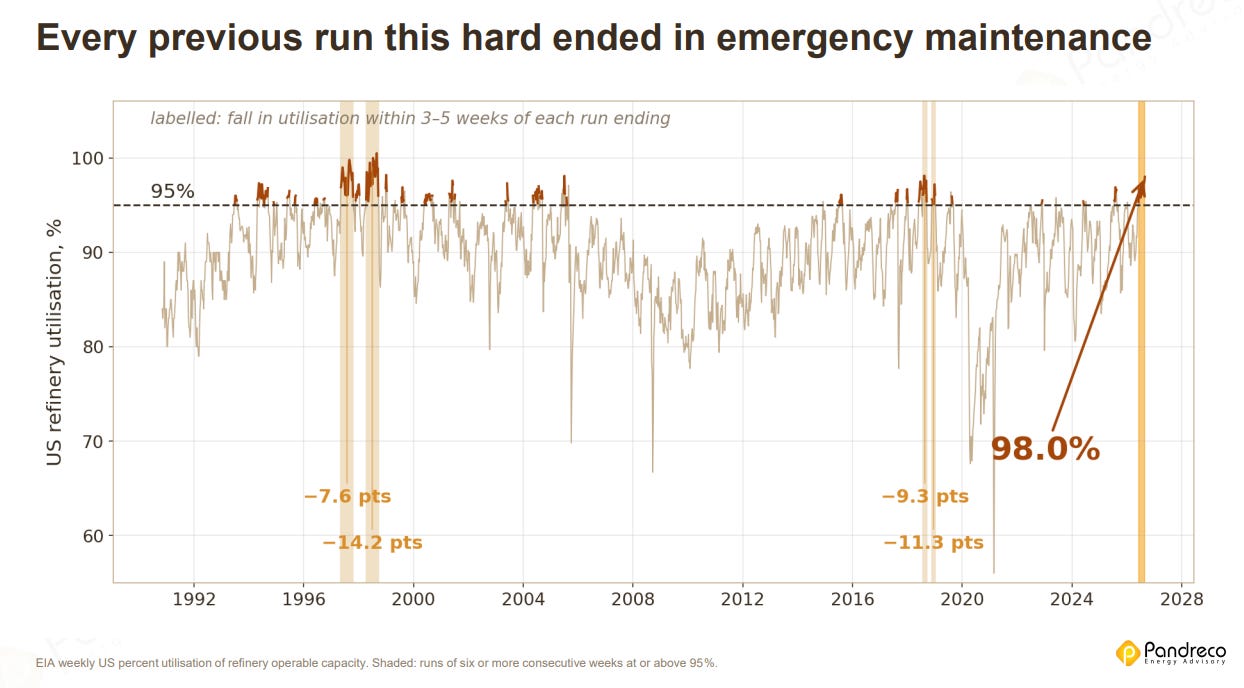
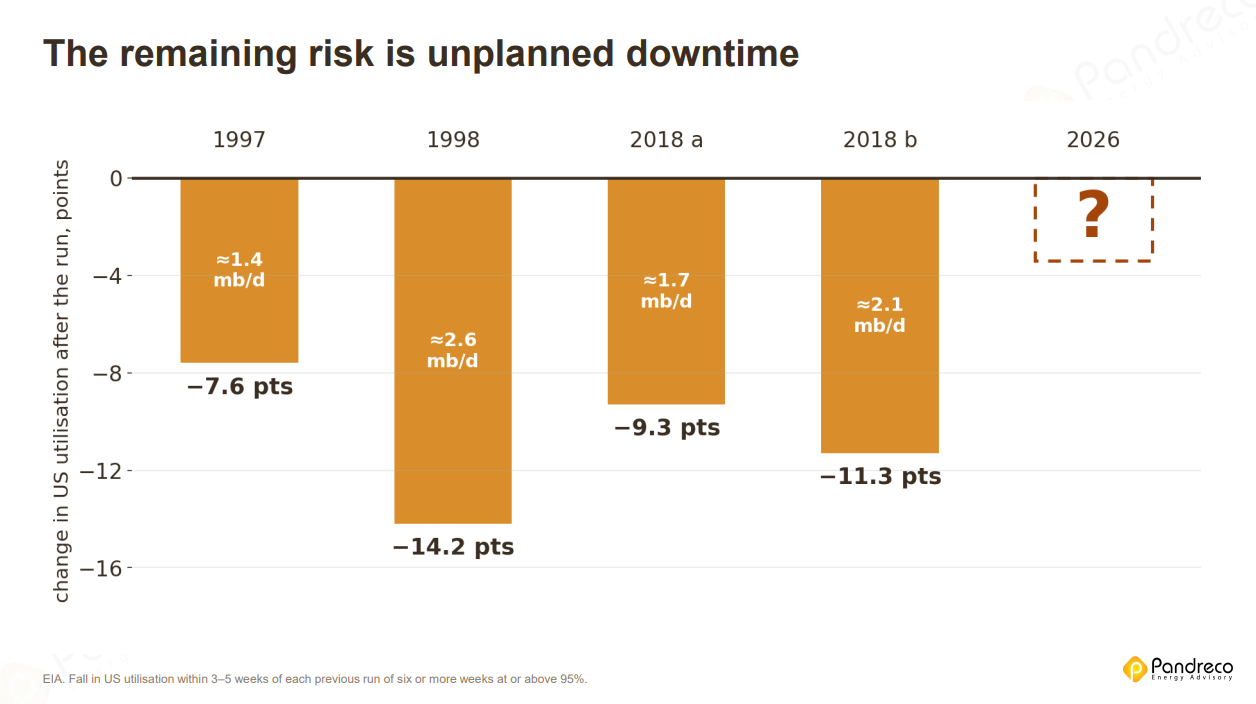
This leads to more downtime and higher prices.
4. Financial & Policy Barriers to New Refinery Construction
- Bank financing for oil and gas projects has been deliberately restricted through proposed capital requirements
- ESG pressures and climate narratives have discouraged investment in energy infrastructure
- Building a new U.S. refinery takes 10-15 years and costs $12-15 billion—politically and financially unfeasible
- The Defense Production Act could accelerate existing refinery expansions, but hasn’t been deployed
5. Climate Policy Consequences
- Discouraged capital investment in energy infrastructure
- Created artificial scarcity by closing refineries prematurely
- Offshored emissions rather than reducing them
- Left Western nations vulnerable to energy blackmail
- Been based partly on debunked climate scenarios (RCP 8.5)
6. China’s Strategic Positioning
7. Energy Security & Geopolitical Fragmentation
- Europe (facing diesel shortages, with some French filling stations 14-15% out of stock)
- California (dependent on imports despite hosting major U.S. military bases)
- Canada (facing potential fuel shortages due to refinery closures)
8. Monetary Policy & Interest Rates
9. Canada-U.S. Energy Interdependence
The overarching theme is that short-term solutions don’t exist—only long-term infrastructure investment can resolve the crisis, but political and financial barriers make that unlikely in the near term.
We had some great comments from folks on the live feed! Great job, Dr. Nemeth, David, and Dr. Pandreco!
Please check out his Substack here.
Check out Dr. Richard Norris Pandreco’s Substack:

Check out Stu Turley on The Energy News Beat Substack:

For David Blackmon

For Tammy Nemeth